
Sunday, 23 November, 1862. As detailed in the last chapter, on this day the 28th Massachussets finally joined the Irish Brigade, as originally intended, before the needs of the Army sent them to the Carolinas. This transfer moved the Regiment from the IX Corps to the II Corps, placing them under Brigade Commander Brigadier General Thomas Francis Meagher – “Meagher of the Sword”, and of the Division commanded by Major General Winfield Scott Hancock – “Hancock the Superb.” Leaving the Irish Brigade was the 29th Massachusetts, a New England Yankee Regiment that was never quite a good fi for the Irish Brigade. (The 29th MA considered themselves an “American Regiment” out of place amongst the Irish.)
The Regiment marched about 2 miles to join Meagher’s camp, arriving at approximately 9AM. The camp of the Irish Brigade was located about a mile-and-a-half from Falmouth (NNW up modern Truslow Road in Stafford County.) Brig. Gen’l Meagher turned out the Brigade at open order in welcome, each Regiment in turn presenting arms as the 28th marched in at “shoulder arms.” The 28th was presented with its Second Irish (Tiffany) Regimental color, with “4th Regt Irish Brigade” embroidered on the upper scroll. Meagher and his staff led a cheer, crying out “Three Cheers for the Fifth Irish Regiment of the Brigade” (somewhat ironic considering the number on the scroll.) All the Regiments “cheered with a will” per John Ryan, to which the 28th strongly replied.
The 28th was initially camped next to the 88th NY, and in the spirit of Irish hospitality. coffee and rations had been provided for the men of the 28th to “sit down to” on arrival.
Interestingly, it is possible that the men did not know of the transfer to the Irish Brigade until it happened. Peter Welsh wrote his wife on the 23rd mentioning his desire to visit a friend in the camp of the 69th NY ‘about 2 miles away” and his return address was a IX Corps one. He doesn’t share the news of the transfer until his next letter on the 30th of November, noting that ‘just after posting the letter” (of the 23rd), they received orders to pack up and move. (Sources: Welsh “Irish Green & Union Blue”, pgs 32-33; Ryan “Campaigning” pg 70.)
Monday, 24 November – Sunday, 30 November 1862. The 28th Mass performs a variety of tasks during this week, but specific dates are not evident. Ryan describes ‘taking a few days to settle in” and then being assigned various duties involving cutting pine trees for huts; building huts (“one per company”) including using their gum blankets on the roof; drilling; and each Regiment spent three days on Picket duty on the Rappahannock, though which days were spent on this duty by the 28th is not clear, nor is where exactly the Regiment was posted. Ryan reports engaging the Confederates in conversation and trade while standing picket, but only when “no superior officers” were around. (Bruce Catton, in “Glory Road” describes the flow of goods and information across the Rappahannock as a bedeviling problem for the Federal High Command.)
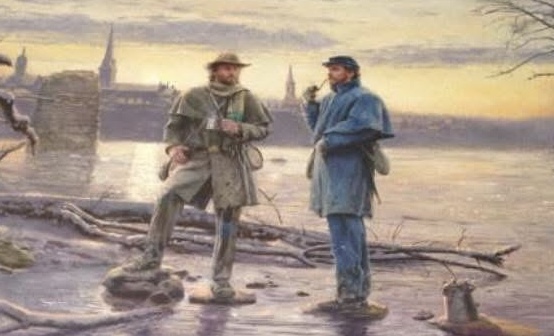
The church spires of Fredericksburg can be seen in the background.
Ryan also reports that after joining the Irish Brigade, the men were issued “quite a number of brown-colored knit blouses, resembling a cardigan jacket” which were believed to have been captured from a blockade runner. He further details wearing white leggings ‘in contrast to the other troops.” To close out this sartorial paragraph, Ryan also ended up in the Guardhouse briefly, on charge of Colonel Byrnes himself, for wearing a pair of “high-topped patent leather boots” to a dress parade.) (Sources, Ryan “Campaigning,’ pgs 71- 74.)
Monday, 1 December – Saturday, 6 December 1862. The Regiment remains in camp with the Irish Brigade. Private William McCarter of the 116th PA recounts that on the 1st of December, the men were ordered to build winter huts. Ryan refers to building huts “one per Company, ‘ but this strikes the reader as requiring quite a large structure, even if the Company strength was only 25-30. Shelter tents and gum blankets were used for the roofs.
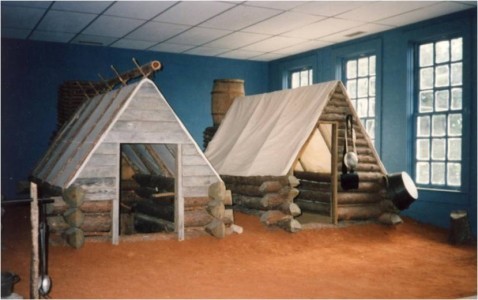
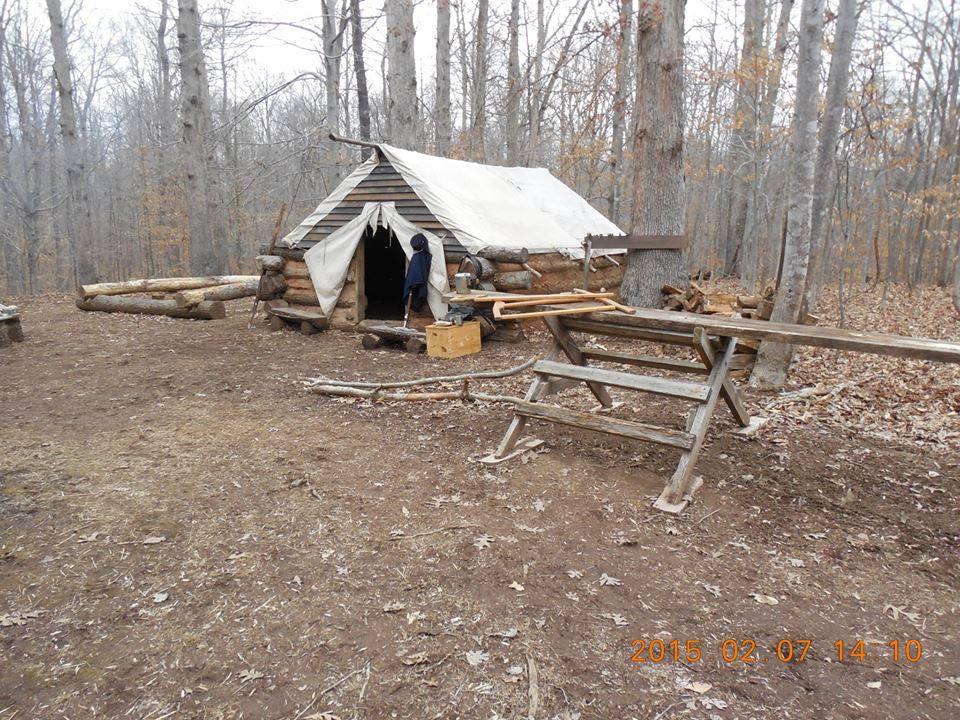
There seems to be a general air of quiet this week. Peter Welsh, writing his wife on the 4th tells her “…there is no immediate prospect of any fighting here and it is doubtful if we will have any this winter .” Ryan describes visiting other Massachusetts Regiments, and curiously, takes some time at this point in his narrative to discuss cooking and tent-building – this is suggestive of a general lull. The Irish Brigade is relieved from picket duty by the Thursday the 5th, and Division Commander Major General Hancock conducted an inspection. Throughout, Col Byrnes continued to drill the Regiment, no doubt to bring them up to his Regular Army expectation. on Saturday (the 6th) a light snow falls.
Sunday, 7 December 1862. Signs and portents appear signaling that that the lull is nearing an end, notably, as ammunition wagons roll into camp. Artillery batteries move to the front; Surgeons and ambulances also move forward.
Monday, 8 December 1862. After a general inspection, the men of the Irish Brigade are told to be “ready to move.” This is the first real indication to the men that something was up. Peter Welsh however writes his wife that day, urging her to “…make her mind easier and not fret and worry so much.” He details building huts, needing tobacco, and that he is keeping “purty comfortable.” He downgrades the possibility of a battle – “ no probability at all here at present “ – cautioning her not to believe everything she reads in the newspaper.
Wednesday, 10 December 1862. The weather is clear, but cold. At noon, marching orders are issued. The men are given three days cooked rations and issued 80 rounds of ammunition. The Army is a beehive of activity as cattle are slaughtered and cooked through the night. Chaplain Corby of the 88th NY records in his memoirs that a soldier approached him with the camp rumor that the Army was going to attack. Corby replied “Do not trouble yourself; your Generals know better than that.”
Thursday, 11 December 1862. The 28th Mass broke their camp about a mile-and-a-half from Falmouth before daylight and proceeded in the direction of Stafford Heights in front of Fredericksburg, keeping out of sight of the Confederates.
Per William McCarter, as the Irish Brigade marched out “by the flank” , the column stretched “more than a mile.” As the Brigade departed camp, Field Music played “The Heights of the Alma” – a popular song from the mid-1850s referring to the Crimean War battle. (Note: McCarter calls the tune “Upon the Heights of the Alma” but it is possible, and potentially even likely, that the tune played was the Irish traditional song “The Rakes of Mallow” from the mid 1740s as the two tunes are virtually identical.)
Colonel Byrne in his official report, as well as John Ryan reports they marched out Stafford Courthouse Road and initially camped in a ravine near the Headquarters of MG Edwin “Bull” Sumner, commanding the Right Grand Division of the Army of the Potomac. This headquarters was at Chatham (AKA the Lacy House), on a bluff overlooking the northern or right pontoon site, due east of the city. (I have marked Truslow Road on the map, as that is the road you would take today to get to the vicinity of the Irish Brigade’s camp, just short of where Truslow Road crosses I-95.)
Peter Welsh, writing to his wife on Christmas, describes “reveille at 4AM, breakfast and packing up camp, leaving knapsacks behind, with some sick men to watch over things.” He further reports starting before sunrise, and marching about 2 hours, staying behind the hills opposite the town in a small wood, then moving closer to the river (the Rappahannock) after dark.
Welsh notes the “carronading was going on all day from daylight in the morning.” Ryan further notes the presence and activity of the Engineer Brigade preparing to lay a pontoon bridge across the river. (Sources: Welsh, Irish Green and Union Blue, pg 42; Ryan, Campaigning, pg 78; McCarter “My Life in the Irish Brigade”, pg 143.)
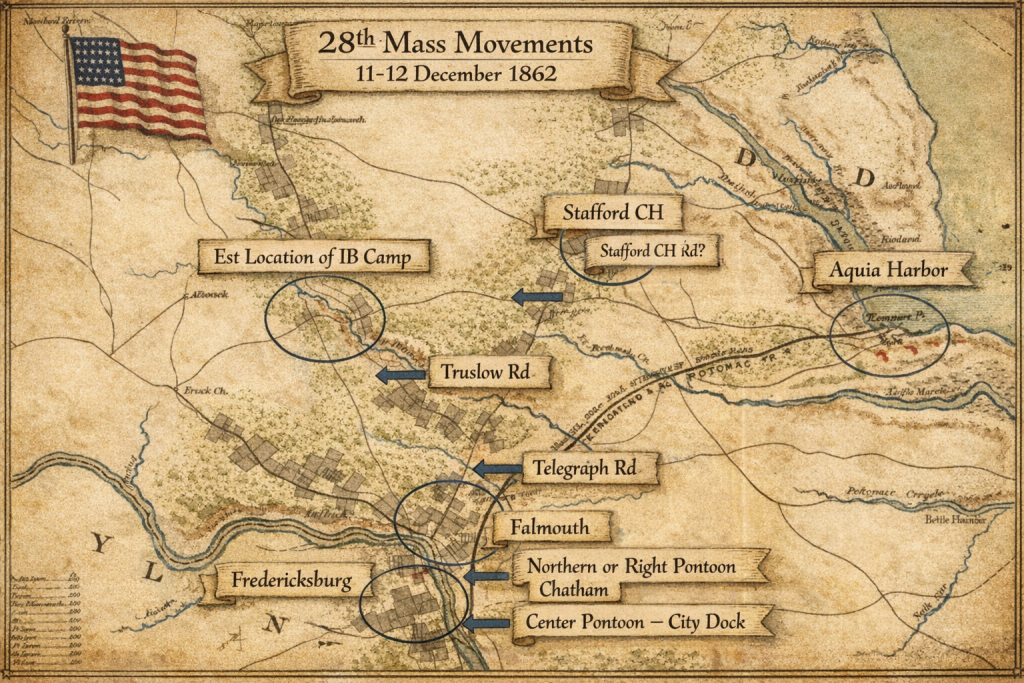
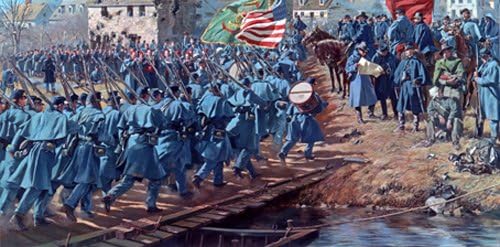
Friday, 12 December 1862. The Irish Brigade, including the 28th Massachusetts crossed into Fredericksburg on the upper or right pontoon bridge (per Colonel Byrnes) as the lead Brigade of Hancock’s Division. The crossing occurred between 7AM and 8AM and the Irish Brigade took some casualties enroute, to include a drummer boy that fell from the pontoon bridge.
The Commander of the 116th PA, St Claire Mulholland, notes that the band of a watching NY Regiment struck up the tune “Garryowen” as the Regiment crossed. This scene is depicted in Don Troiani’s painting of that name (pictured). (Note: “Garryowen – from the Irish Garraí Eoin, meaning Saint John’s Court — is an 18th Century Irish jig, referring to a neighborhood in Limerick, Ireland. It was originally a drinking song. In the 1850s, the NY militia unit that ultimately became the 69th NY, adopted the tune as their official marching song. Lyrics can be found in the 28th Mass’ songbook (2008)
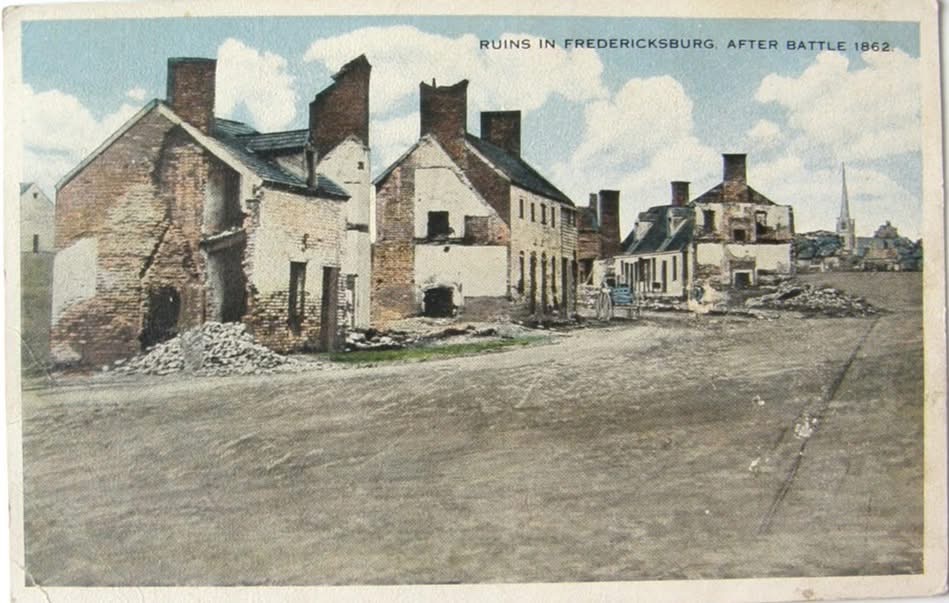
Private John Ryan reports that the Regiment “took up positions” on the streets of Fredericksburg and described the worn-torn nature of the town, noting specifically the bodies of fallen Confederates. The Regiment, along with the rest of the Irish Brigade “slept on their arms” (e.g, slept rough without shelter) in the current location of the Fredericksburg City Dock, at the southern terminus of Water Street (now called Sophia St) – this location was close to the railroad bridge, just north of the center pontoon bridge.
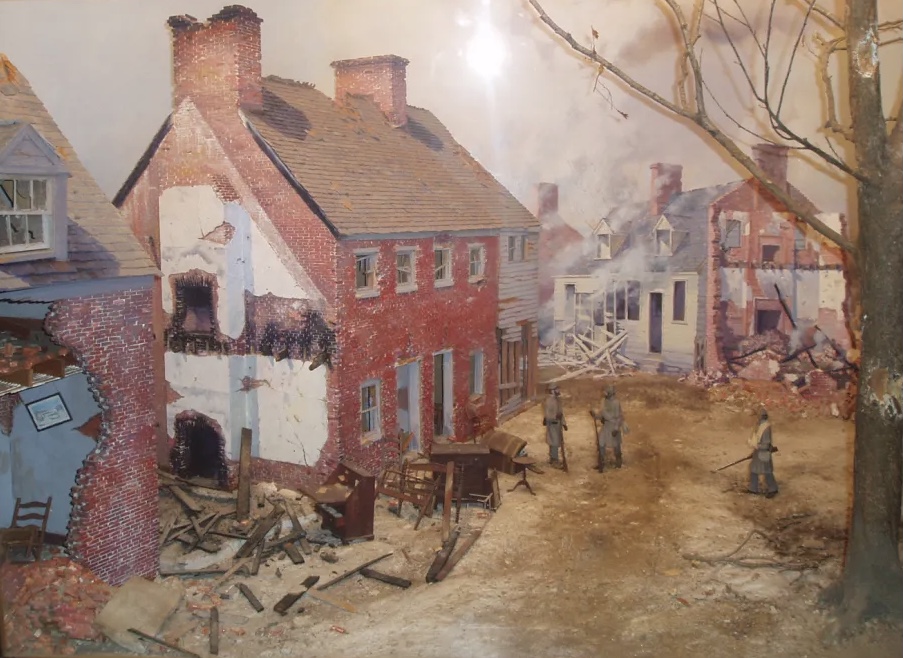
There the men stacked arms and tried to fashion ways to stay out of the ankle deep mud. Looting of nearby homes almost certainly occurred, as the men searched for food and other spoils of war. Prohibited from fires overnight, Northern Lights lit the December sky, overlooking the sleeping men. ( Sources: Ryan, “Campaigning”, page 79. O’Reilly, The Fredericksburg Campaign, pg 108., McCarter, “My Life in the Irish Brigade,” chap 8.)
Saturday, 13 December 1862 – the Battle of Fredericksburg.
The Regiment awoke at City Dock at 4AM, their blankets covered in frost, fed themselves in small groups, and fell in about 8AM. Peter Welsh describes this in his Christmas letter to his wife recording that they slept in mud “to the ankles”, laying on boards where they could, and said he “slept as sound as ever I had done in my life.”
Around noon, Irish Brigade Commander Brigadier General Meagher appeared on horseback and made a rousing speech to each Regiment in turn, receiving the cheers of the men each time. John Ryan recalls the speech as encouraging in what was expected of them and concluded that if they were victorious they could soon go home — but if not, it would have to be fought again.” Sprigs of boxwood were handed out, and the Regiment affixed these green symbols to their caps and uniforms.
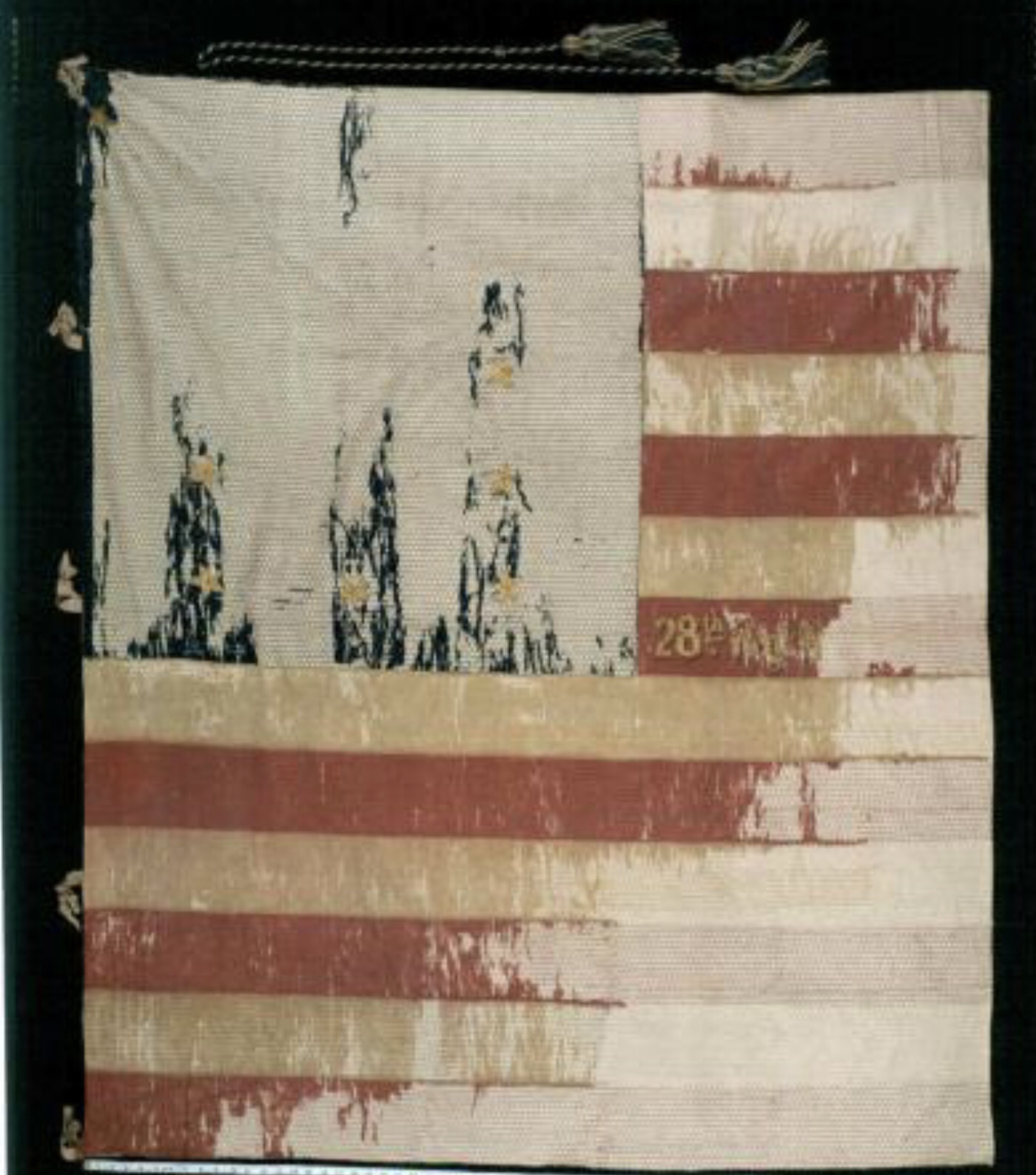
At around 1230 PM, per a January 10th, 1863 account written by William McCleland in the New York Irish-American, the order was given: “Shoulder Arms – Right Face – Forward – Double Quick – MARCH!” The Irish Brigade marched in a column of regiments, led by the 69th NY. The 28th Mass was third in the column, following the 88th NY and immediately trailed by the 63rd NY. Fluttering above the Regiment were the First National Flag and the Second Irish (Tiffany) green Regimental. As the only Regiment in the Brigade with its green color present – the colors of the NY Regiments having been sent home and replacements had not arrived; the 116th PA never having green colors – this formation placed the 28th Mass in the center of the Irish Brigade.
Ryan reports that the Brigade marched out in a column of fours. The route was north from near the railroad bridge (modern City Dock) along Water Street (modern Sophia St) to George St, where the Brigade turned left (or west) and marched through the city towards Maryes Heights, climbing a small hill that crested short of the City limits. Descending on the western side of the hill, the brigade was directly exposed to the direct fire of Confederate artillery on Maryes Heights. George St curved into Hanover St, just short of a mill race (a canal ditch – modern Kenmore Avenue). (Note: Some accounts indicate that the Irish Brigade marched out on Hanover St, but historian Francis O’Reilly has pointed out that soldiers described their route as the street with all the churches – which is George St, one block north of Hanover.) (See below map, an inset from an ABT map.)
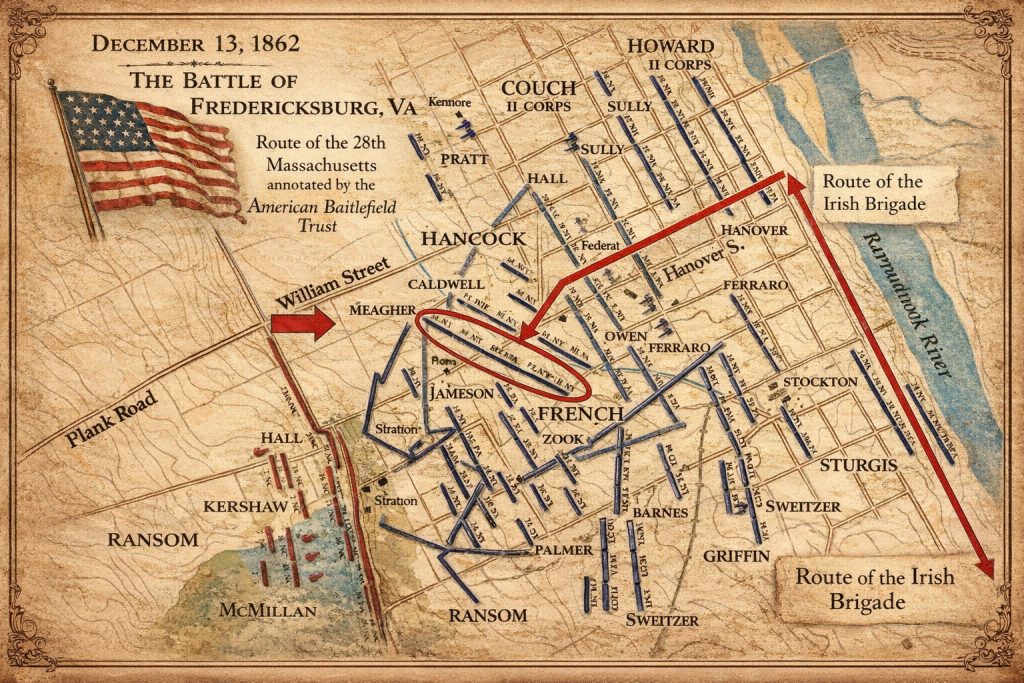
Ryan reports crossing the mill race on “a little bridge”, as did the Regiments directly ahead in the column. The trailing Regiments were forced, in the name of timeliness, to wade across. It was unseasonably warm that afternoon – near 60 degrees and the men were clad in great coats.
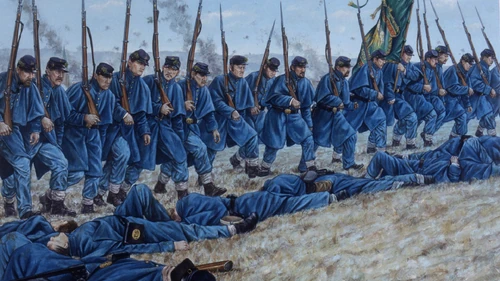
Both Ryan and Peter Welsh vividly describe the maelstrom of the combat in front of the stone wall, with Ryan further likening the fire they received to what was given to the Confederates at Gettysburg the following July. (Pickett’s Charge on the 3rd day of the battle.)
On the far side of the mill race, in defilade (a bit) behind some high ground and some houses, the Irish Brigade went from a column of regiments into a brigade line. From right to left, the line was the 69th NY, the 88th NY the 28th MA, the 63rd NY, and the 116th PA.
The Irish Brigade was the fifth II Corps Brigade thrown sequentially against the defenders of Maryes Heights that fateful afternoon. First were three Brigades of French’s Division, followed by Zook’s Brigade of Hancock’s Division. At approximately 1:45 PM, the Irish Brigade had their turn and advanced in smart lines towards the enemy, the battlefield littered with men in blue from earlier waves.
Like the others, the attack failed under the tremendous fire of the defenders. Mere yards from the enemy, soldiers took cover behind a brick house (the Stratton House) and in a providential dip in the ground that offered some cover if prone (“the swale”.) Fire was kept up at the enemy, but it was not enough. Don Troiani captured the crest of the attacking Irish Brigade in his painting “Clear the Way”, the title evocative of the Regiment’s war cry “Fág an Bealach.”
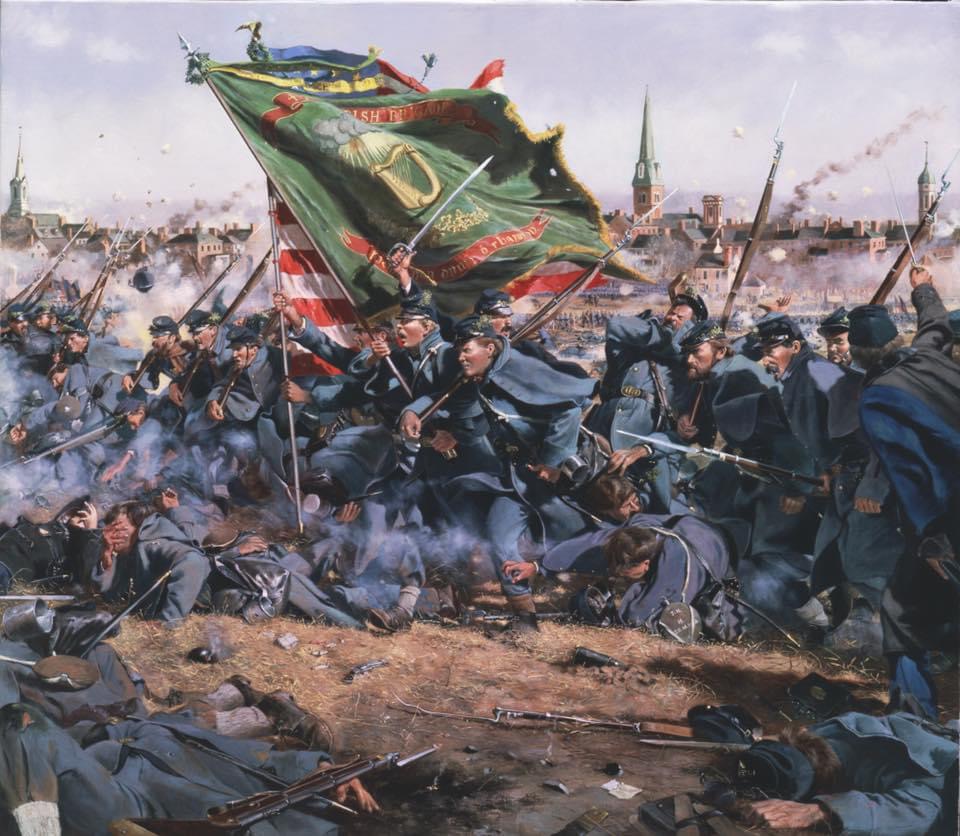
The noted historian Bruce Catton, described the attack of the Irish as thus: “Second wave now – Brigadier General Thomas F. Meagher’s Irish Brigade. Meagher himself magnificent in a tailored uniform coat of darkest green, silver stars embroidered on black shoulder knots, a yellow silk scarf across his breast -“a picture of unusual grace and majesty,” a Pennsylvania soldier wrote. The Irishmen had only one of their green flags this day, the others having grown too tattered for use and replacement flags not having arrived, and this one green flag was borne by the 28th Massachusetts, a regiment of Bay State Irish specially recruited for this brigade. Every man in the brigade wore in his cap a sprig of evergreen, and Meagher sent them down Hanover Street and out towards the canal, 69th NY in the lead.
Like the others, the brigade formed beyond the canal and went swinging ahead, and the men who lay on the ground raised their heads and cheered as they saw them coming. The men tromped on, past the dead and the wounded and the beaten-out men of other commands, and got up to that deadly, insignificant little high place in the flat plain, and the smoke rolled down on them like a killing cloud. the men could see very little and they could hear nothing at all but the unending racket of the firing. It was all but impossible for officers to pass an order in the choking confused tumult. Now and then men got a glimpse of a few officers farther forward trying to tear down an obstructing fence. The 88th New York knelt behind another fence and opened its own fire, and the whole field was a pandemonium of smoke and flame and shouting men. Captain Condon of the 63rd New York learned he was in command of the regiment, and when he tried to get the men together he could only find nine of them. As he was lining up this remanent of command he saw a slightly larger fragment drifting up out of the smoke, a green flag at its head: the Colonel of the 28th Massachusetts , who had a dozen men with him. The two officers shook hands and agreed that the brigade had been cut to pieces, and in the end they got their men back to the riverbank and found General Meagher rallying other survivors. By evening he was able to assemble 250 men out of the 1,400 the Brigade had taken into action.”
By 2:15PM, the attack had been shattered. Federal soldiers with boxwood sprigs in their caps lay within 50 yards; as close to the stone wall as any. Below that wall lay a field of fallen soldiers in blue. Wounded and dead men lay there from the shattered Regiments; only after nightfall was it considered safe to quietly straggle back towards the relative safety of the city. The night turned bitterly cold, and it rained at some point, adding misery atop calamity to the survivors, both wounded and unhurt.
Francis O’Reilly, in his book “The Fredericksburg Campaign” recounts that the 9th Massachusetts Volunteers, like the 28th, an ethnic Irish Regiment, as they crossed the Rappahannock late in the day to join the fight, “…stumbled upon the used-up 28th Massachusetts of Meagher’s Irish Brigade. Many of the grimy soldiers “shook their heads in a rueful and not reassuring manner.” A captain in the Irish Brigade remarked to them “it was the toughest place he had ever been into and that he was sorry to see us going in.”
Colonel Byrnes in his official report later recorded the 28th’s casualties as: 11; wounded, 116; missing, 30; total 157 — of 416 that started. (This number is often listed as 158 as well.). Approximately 38% of the Regiment were casualties in the 30 minutes of the attack – the heaviest loss in the Irish Brigade’s five Regiments.
Brigadier General Meagher’s official report of the battle, was published in Boston in the Pilot Newspaper on 10 January 1863. In this report, he singles out the 28th Mass and its leaders, Colonel Byrnes and Major Carraher: “It (the 28th Mass)… is a substantial and splendid accession to the brigade. It has sinew, heart and soul. It is commanded by an officer (Col. R. Byrne) than whom it would be difficult to find one of superior aptitude for such a command, combining as he does, the practical experience and matured capacity of a soldier of some years standing with the natural qualities which enable one to figure prominently and successfully in military life. I have not a word but one of unqualified commendation to bestow on this well-regulated and admirably disciplined regiment. Major Carraher, one of the best of its excellent officers, was wounded in the head.” (Meagher’s report is also found in the “Official Records” (O.R.) in vol XXI, pp 240-246.)
Sources: Ryan “Campaigning” pge 79-81; Welsh “Irish Green & Union Blue” pgs 41-43; Catton “Bruce Catton’s Civil War: Three Volumes in One”, pg 253. The extract is from second volume in the collection, “Glory Road” – part one, chapter 4 “Burnished Rows of Steel;” O’Reilly, “The Fredericksburg Campaign” pg 374.
Sunday, 14 December 1862. During the evening and night of December 13th, elements of Irish Brigade had crossed back over the Rappahannock to the Stafford County side of the river. The Regiment occupied the camp where it had spent the night of December 11th, carrying as much of their wounded over as they could manage.
On the morning of the 14th, the Brigade was ordered back across the river, and John Ryan reports that they moved “to the left of the town” (e.g. : south) taking up position near a “gas house” in the vicinity of the center pontoon bridge – modern Fredericksburg City Dock – near where the Regiment had spent the night of the 12th of December. The Regiment stacked arms and waited for orders; Ryan reports that they entered local houses, looting feather beds and ticks for their comfort, as well as flour and cornmeal, which they used to make pancakes. Some soldiers fished some tobacco out of the river, to their delight. Colonel Byrnes mentions that there was a resupply of ammunition, bringing each man to 60 rounds each.
Ryan further records that at some point they fell in, and marched west through the city towards the Confederate positions, leaving some to conclude that they were going to re-enter the fighting. As they marched, other Federal units cheered them. Instead of rejoining the battle, Ryan recalls that they instead “…moved to a Catholic Church and there a green flag was presented out of the church to one of New York Regiments.” He further details that the three cheers given by the Irish Brigade caused a Confederate bombardment of the church.
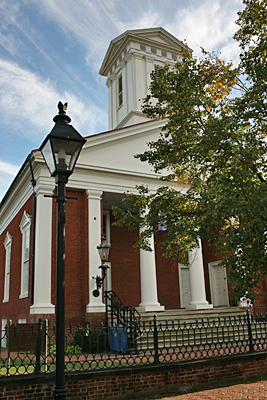
The ceremony at the Church is not mentioned in either Brig Gen’l Meagher’s or Colonel Byrnes’ reports of the battle. Nor was there a Catholic Church in Fredericksburg city at the time. It is possible that the church is the Presbyterian Church on George St which to this day proudly displays two cannonballs in its columns as legacy of the battle. (This said, D.P. Conyngham, in “The Irish Brigade” says that the ceremony for the new green colors for the NY regiments took place in a small theater, where a small feast attended by a number of Generals occurred under a bombardment. General Hancock is said to have observed “Only Irishmen could enjoy themselves thus.”)
Afterwards, the Regiment moved back to his previous position near the center pontoon/gas house where it would remain one further night.
Sources: Col Byrnes Report, Ryan “Campaigning” pgs 81-83, Conyngham, Irish Brigade, pg 354.
Monday, 15 December 1862. Army of the Potomac Commander Major General Burnside, after being dissuaded by his Generals from renewing the Federal attack, ordered the army to retreat back across the Rappahannock. Ryan recorded that this occurred after dark, with all efforts being made to make the move quietly. Federal wounded and “all of our dead” were left behind as Confederate skirmishes occupied the town. The weather turns bad with strong wind and snow. The 28th and the Irish Brigade, recrossing over the upper pontoon bridge, returned to their “old camp” near Falmouth. The Battle of Fredericksburg was over – a decisive defeat for the Union – and one that cost 158 casualties in the Regiment.
Sources: Col Byrnes Report, Ryan “Campaigning” pg 83.
Tuesday, 16 December – Thursday, 18 December 1862. A temporary truce enabled both armies to recover their wounded and to bury their dead. John Ryan was part of the burial detail and describes the “majority of our dead were destitute of their clothing, it being taken off by the Confederates for their own use.” The dead were placed in long entrenchments dug for that purpose, there being laid side by side, and layered on top in subsequent rows, then covered in dirt. Most were not identified, unless the fallen soldier had taken the precaution of pinning a piece of cloth or paper bearing their name to their uniform. “Burial of the dead is one of the saddest incidents pertaining to a soldier’s life” Ryan says – almost 14 years later, he would lead the details that found and buried the Custer brothers after the Battle of the Little Big Horn (June 1876).
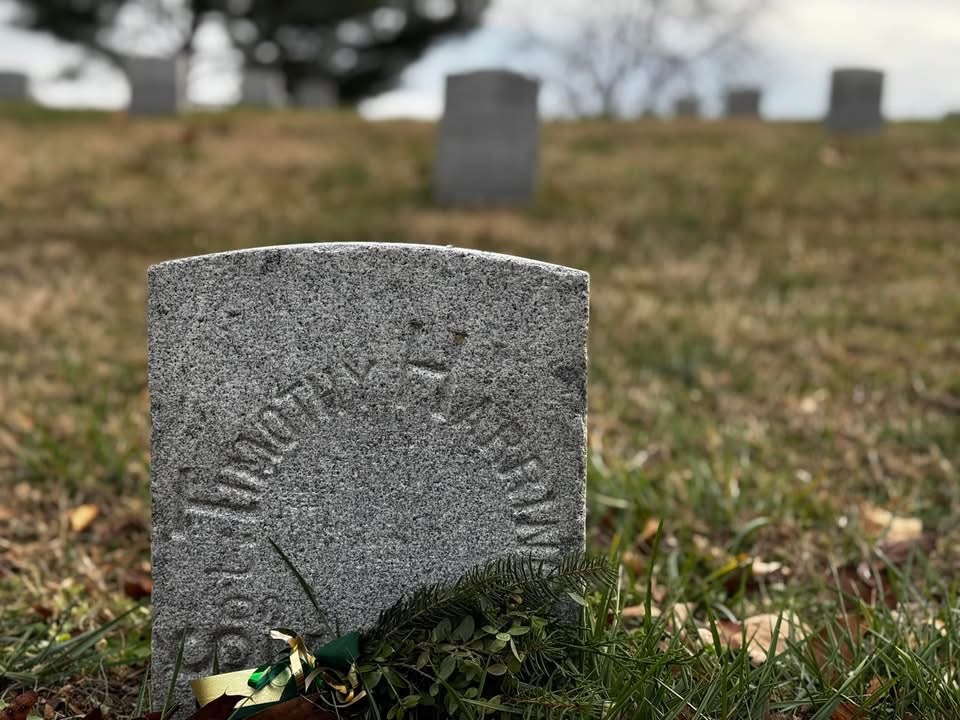
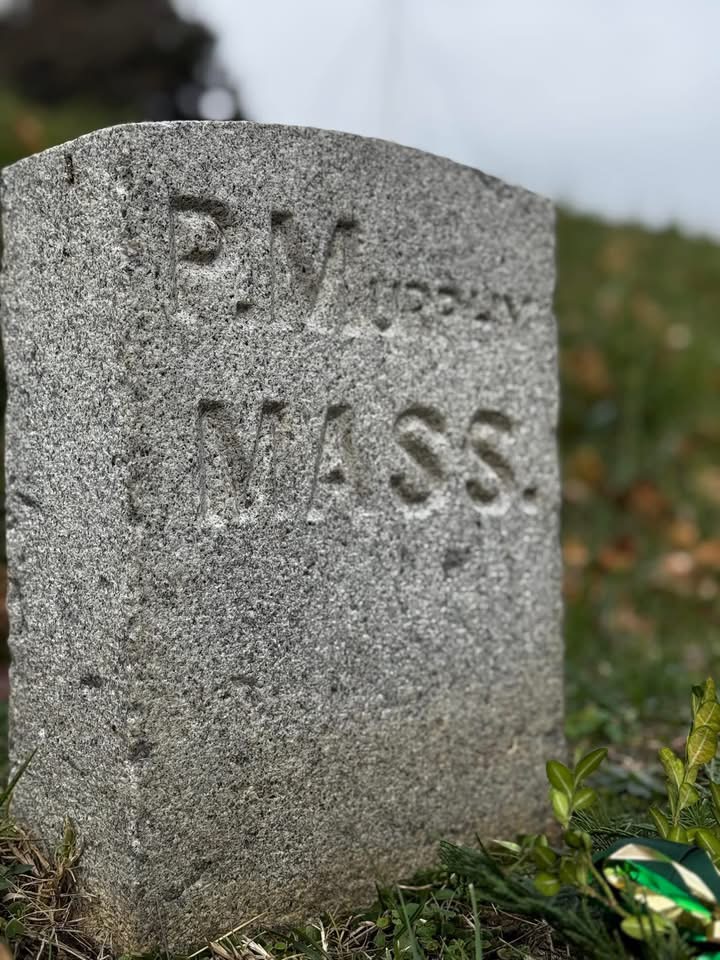
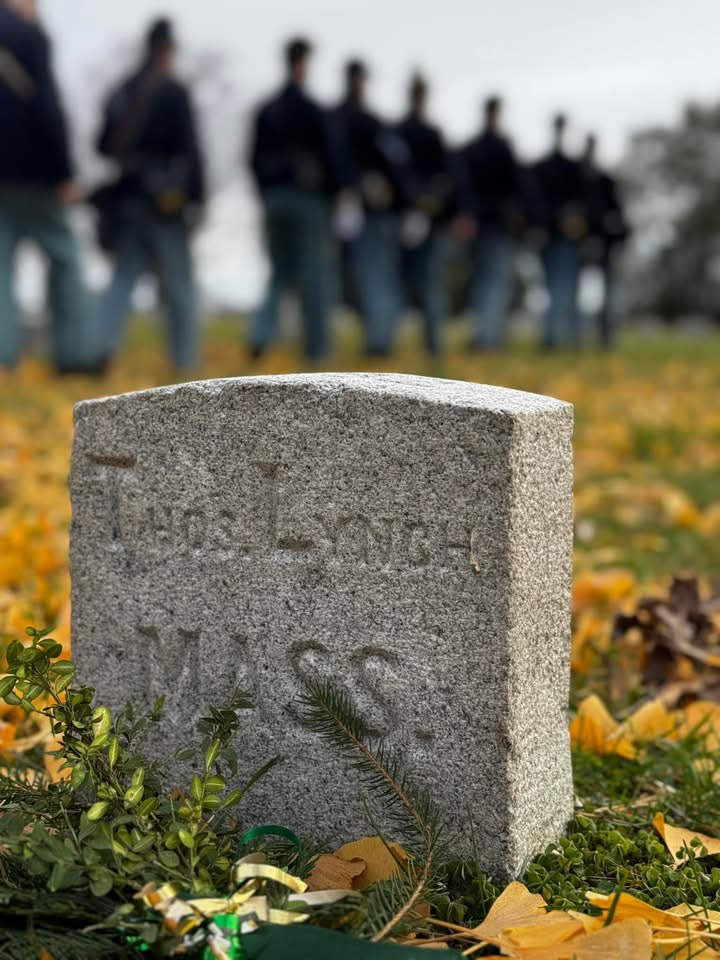
After the end of the Civil War, Congress authorized a National Cemetery atop Maryes Heights in Fredericksburg. More than 15,000 Federal soldiers rest there, including three from the 28th Mass, one of which – Private Thomas Lynch, 33 of Boston – died from wounds received in the battle. Of the 15,000 plus, only the names of about 20% rest under a gravestone bearing their name and Regiment. To each one we pray the traditional Irish prayer “Ar dheis Dé go raibh a anam” – “May his soul be at God’s right hand.”
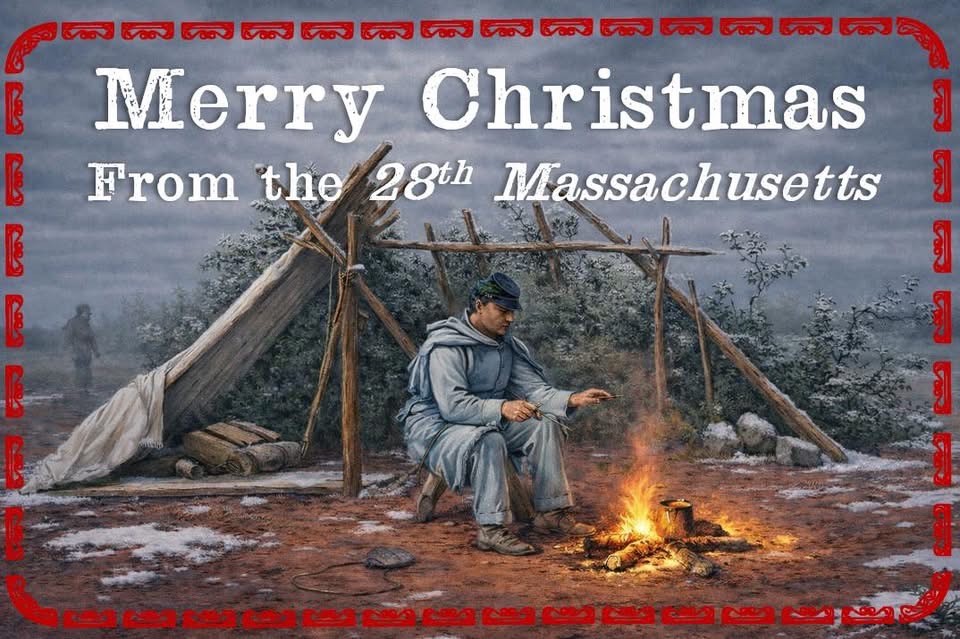
Thursday, 25 December 1862. The 28th Massachusetts, along with the rest of the Irish Brigade, spent Christmas 1862 in its camp, a mile-and-a-half northwest of Falmouth. In the 10 days since returning from the battle, the Regiment had taken their turn on picket duty. John Ryan recounts “…doing the usual camp duty, drilling and fatigue…”
Peter Welsh received a letter from his wife on Christmas Day, and wrote her a long letter, the second he had sent her since the battle. In this letter he first assured her that some things she had read in newspapers – about a lack of rations, clothing, and a “killing frost” —were not so. He himself had been acting as Commissary Sergeant, detailing that “…a full alowance (sic) of bread meat coffe (sic) and shugar (sic) is always to be had unless the wagons meet with some accident which seldom occurs …the bread and meat alowed (sic) is not sufficient to satisfy a mans appetite without the other rations but a man can live on it …there is beans and rice and vegetables alowd (sic) … we get mixed vegetables pressed and dry which are very good to make soup.”
Welsh used his Christmas letter to detail his personal experience in the battle, which no doubt was eye-opening at home. Father Corby, Chaplain of the 88th NY, in his memoirs describes that during this period “all of us were sad, very sad” but there is no air of this in Welsh’s letter. However, Al Connors and Chris Mackowski in their book “Seizing Destiny” detailing the strategic rebirth of the Army of the Potomac between Fredericksburg and Chancellorsville, in an aptly named chapter entitled “The Bedraggled Army” describe a winter of discontent, where the morale of the Army “plummeted precipitously” in the days and weeks after the defeat at Fredericksburg. It is not surprising that Welsh, whose care and affection for his wife is manifest in his letters home, would not convey this attitude to his wife, whether he felt it or not. He did very practically ask her to send him some salve ointment “ – noting not to send it in a box – which frequently get lost — but to “…sew it up in a little bag, make it flat, and fold it in a handerchief (sic) and send it.”
Sources: Ryan “Campaigning” pg 88; Welsh “Irish Green & Union Blue” pgs 45-47; Corby “Memoirs” pg 135; and Connor/Mackowski “Seizing Destiny” pgs 2-3.
Thursday, 1 January 1863. The Regiment began 1863, its second full year of Federal service, in its camp of canvas-roofed log huts, a mile-and-a-half north, northwest of Falmouth, VA. In the two weeks since the Regiment’s return to the camp after the Battle of Fredericksburg, it had settled in the routine of winter camp life – resting, drilling, taking its turn on picket duty, parading, and generally recovering from the ordeals of the previous three months. Some records indicate that the units in the Army of Potomac received a tot of rum to mark the new year (pictured), but there is no specific record indicating whether or not this included the Irish Brigade. One may hope it did!
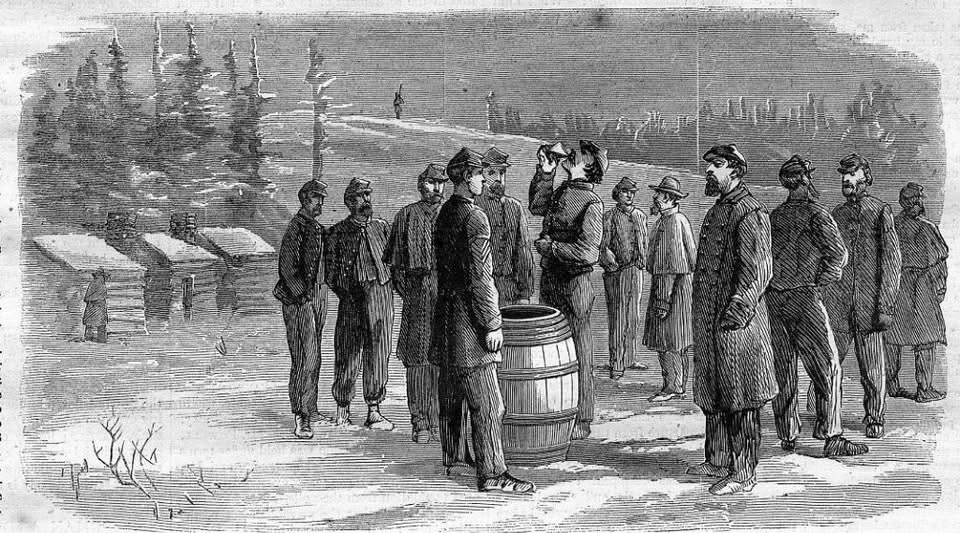
Harper’s Weekly, 1865
Our usual sources – John Ryan of the 28th Mass, Chaplain Corby of the 88th NY (at this point the only Chaplain still with the Irish Brigade), Captain Conyngham of the 69th NY, and William McCarter of the 116th PA – are silent on the events of this period. Peter Welsh carries on his correspondence with his wife, writing her on January 4th, 7th, and 14th; receiving letters from her on the 5th and the 12th. These letters are full of the domestic chatter of spouses, descriptive of their conditions, thankful for things sent and received – $20 to her and an Agnus Dei medal for him. (This medal is a Catholic devotional item featuring the “Lamb of God,” symbolizing Jesus Christ’s sacrifice, used for spiritual protection and as a reminder of baptismal promises.).

Two items of interest may be derived from Peter Welsh’s letters. The first, from his letter of January 4th, is commentary of the 28th’s Colonel (Richard Byrnes). Welsh tells his wife: “…Thier (sic) is good many of our regiment who hate our Colnel (sic) because he is a man of decipline (sic) …he is the right kind of officer to have in command. He will alow (sic) neither Officers nor men to shirk their duty…there is no partiality shown to any…he also looks out for the rights of the his regiment…if there is any cause of complaint he makes it his business to look after it immediately.” Welsh’s commentary shows his maturity as a man and a soldier, appreciative of his tough but fair commander. As mentioned in early entries, Byrne had been appointed the Commander of the 28th in October 1862, immediately professionalizing the Regiment, relieving personnel and instituting drill and better practices. This was not universally popular and a number of officers resigned over the elevation of an outsider.
The second notable thing that may be derived from Welsh’s letters, as well as the other sources, is the utter absence of any mention of Lincoln’s Emancipation Proclamation, which went into effect on the 1st of January. The Irish-American soldier of the Civil War, as well as its community at home, were not Abolitionists as a general rule – in February, Welsh would mention to his wife (in response to rumors that Massachusetts was raising colored regiments) that the feelings against colored people was “intensely strong”..and that they are “…looked upon as the principal cause of the war and this feeling is especially strong in the Irish regiments.” This may certainly explain the absence of comment on the Proclamation, which was likely known, as newspapers were available, and Welsh’s wife had sent him a Boston Pilot, for which he was grateful.
Sources: Welsh “Irish Green and Union Blue” pgs 51-58. For the Irish view of colored people, Welsh, pgs 61-62; Bell Irvin Wiley “The Life of Billy Yank” pg 109; Susannah Ural Bruce “The Harp and the Eagle: Irish American Volunteers and the Union Army, 1861-1865”, chap 4; Damian Shiels “Green and Blue: Irish Americans in the Union Military 1861-1865” pg 5.
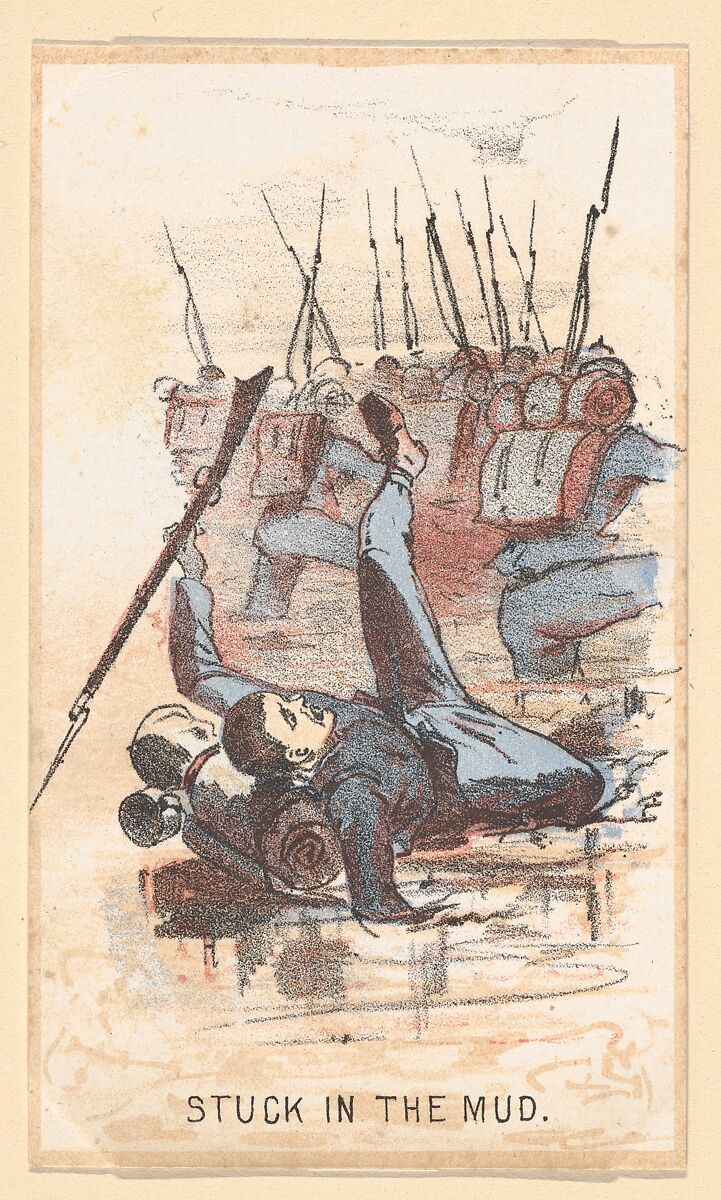
Tuesday – Thursday, 20 -22 January 1863. These dates mark the infamous “Mud March” of the Army of Potomac, Burnside’s failed attempt to move west of Fredericksburg, cross the Rappahannock River, and get on the flank of Lee’s Army of Northern Virginia. Tuesday 20 January started fair, but by evening, the skies opened and a torrential winter rain fell, swelling the river and turning the roads into ankle-deep muddy bogs. The II Corps, containing the Irish Brigade, was to be last in the order of march, and both John Ryan and Peter Welsh note that while they were ready to move, they never did, thus being spared the ordeal – a rare piece of luck for the Irish Brigade. Both noted watching other units straggle back to their camps, exhausted, wet, and muddy. Welsh, in a letter dated 23 January, notes that some of their pay had caught up – at least through November, 1862 – he credits this occurrence to their “old division” (e.g, in the IX Corps.)
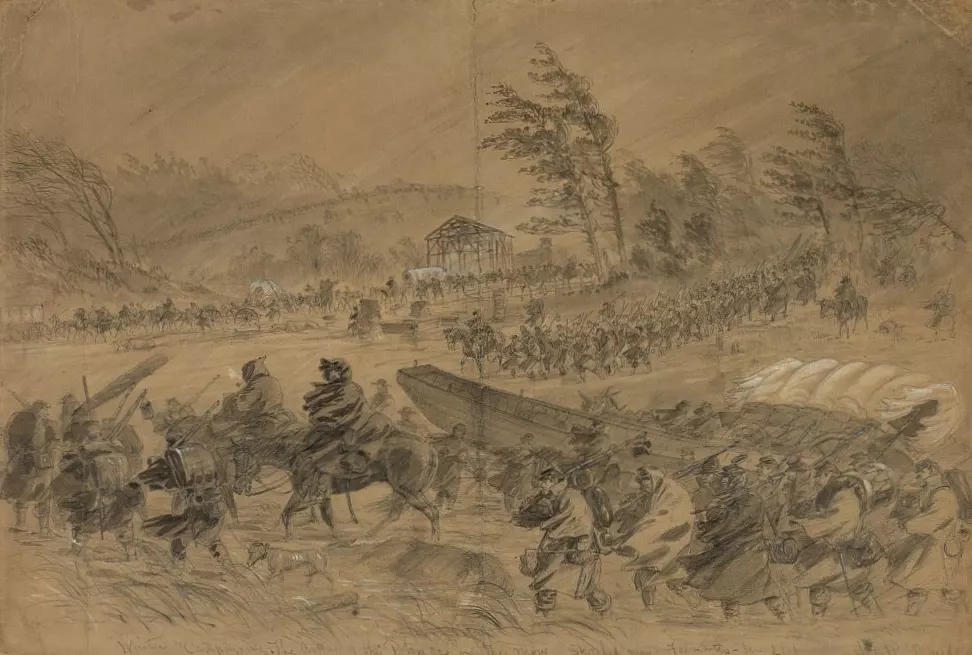
Sources: Ryan “Campaigning” pg 88-89; Welsh “Irish Green & Union Blue” pg 59.
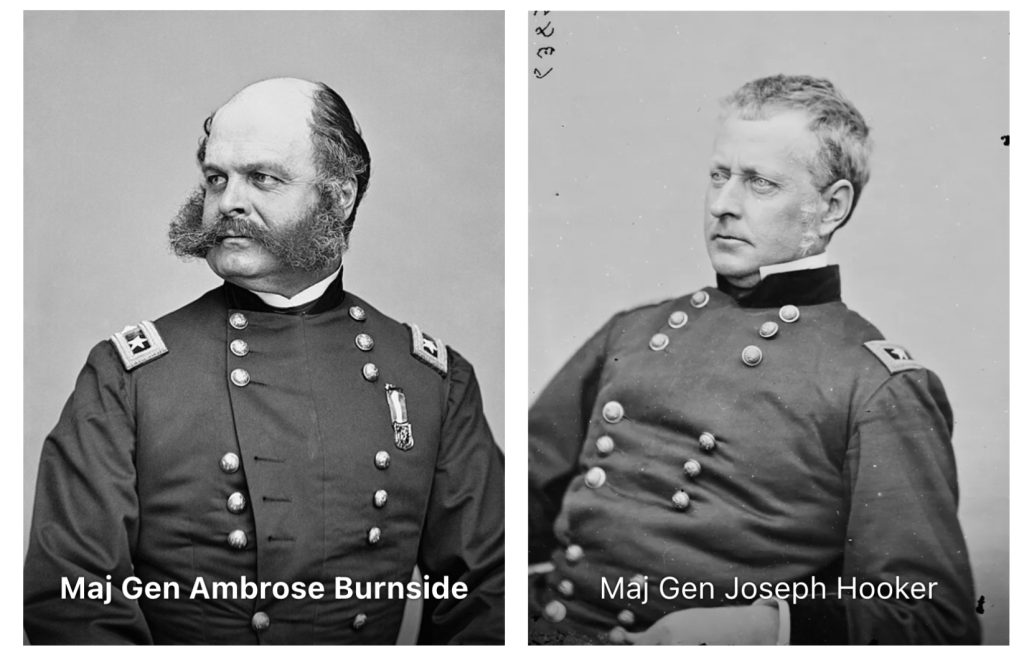
Monday, 26 January 1863. Major General Ambrose Burnside is relieved as Commander of the Army of the Potomac, and is replaced by Major General Joseph “Fighting Joe” Hooker. Neither John Ryan or Peter Welsh offer any commentary on this change – the 28th likely would have had an opinion on Burnside, as he was their Corps Commander throughout the Maryland Campaign. (It is generally believed that the IX Corps held Burnside in good favor.)
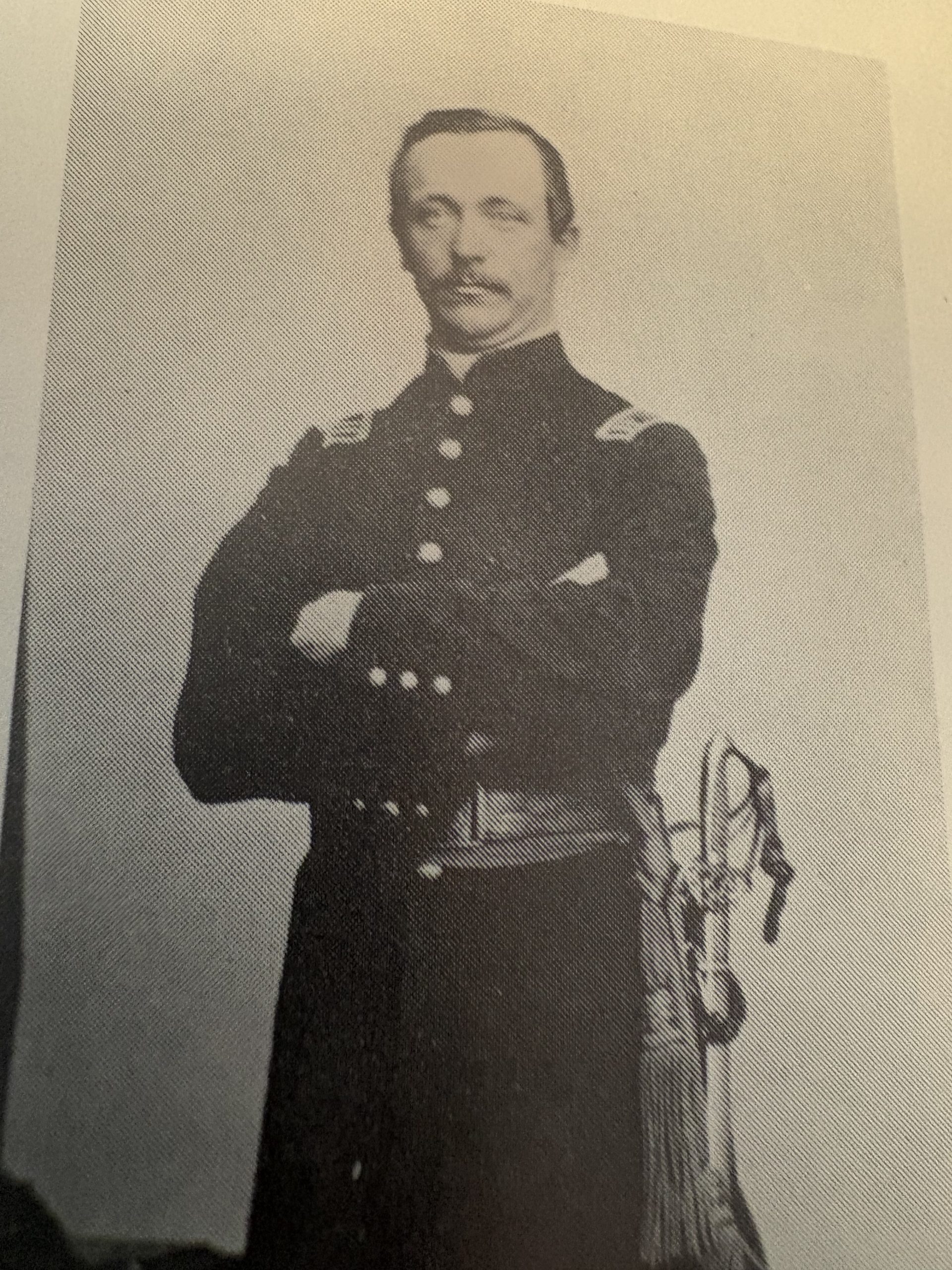
Sunday, 1 February 1863. On February 1st, the Regimental strength was 25 Officers and 306 Enlisted men present for duty. On paper, the Regimental strength was 34 Officers and 612 Enlisted men. The difference reflected men detailed to other units, in hospital, captured, on leave, or simply missing. As point of comparison, one year prior, in mid-February 1862, the Regiment’s strength was 30 Officers and 910 Enlisted present for duty (37/925 on the rolls.) Additionally, over the course of 1862, the regiment had gain approximately 144 soldiers, although some of this gain is soft – a returned deserter counted as a “gain” as the soldier would have previously been a “loss.”
In one year of service, the Regiment had lost between 64 – 65% of its starting strength – dead, wounded, discharged, transferred, resigned, missing, etc. Of the approximately 750 plus (factoring in the gains) losses, 515 were attributable to battle action – a real indication that the 28th Mass was a “Fighting Regiment.”
The specific breakdown of those present in the 1 Feb 1863 report was as follows: Field/Staff – 5/2; Companies: A – 2/36; B – 2/26; C – 1/35; D – 3/36; E – 2/28; F – 2/23; G – 2/32; H – 2/24; I – 3/31; K – 1/33 Total Present – 25/306 Total Present and absent – 34/612

Sunday, 15 February 1863. Midway through a quiet month in the regimental camp near Falmouth. Peter Welsh writes his wife and notes that his Company (K) Commander, Captain Charles H. Sanborn has returned from Boston with new flags, saying “our captain has got back and brought a new green flag for the regiment.”
Sanborn had been wounded at Fredericksburg and subsequently went back to Boston just after Christmas, bearing the Regiment’s tattered flags (First National and 1st Irish) from its year of hard campaigning in 1862. On his return, he carried a new National flag – certainly the “Second National.” The Massachusetts State House Battle Flag Collection does not have the new green Regimental, but it is believed to be a replica of the First Irish (Pilot) Flag.
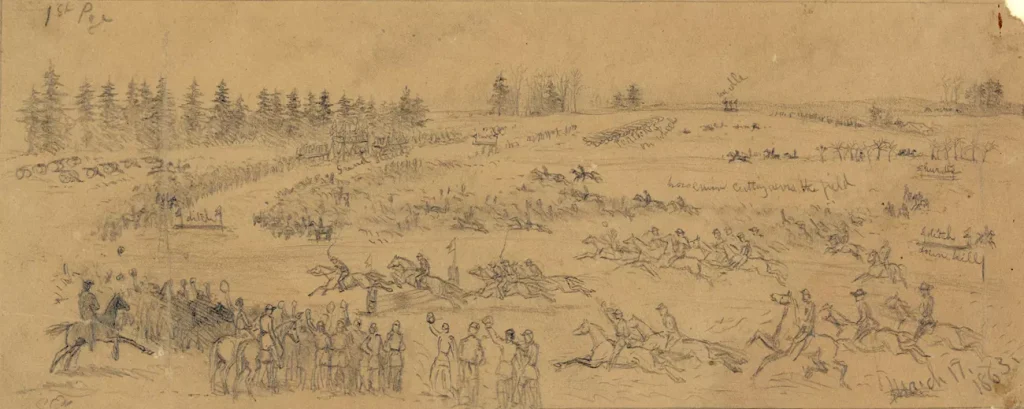
Tuesday, 17 March 1863. The celebration of the Irish Brigade of Saint Patrick’s Day 1863 is legendary. Set on the parade ground between the Irish Brigade camp near Falmouth and the Divisional Headquarters of General Hancock, the Officers of the Brigade organized a series of events to mark the Saint’s Day. John Ryan lists these as “…horse-racing and hurdle jumping, for which there were prizes offered and for mule racing. In the mule race, the prize was for the one that came in last…” Ryan also catalogued that they also “…had foot racing, sack racing, picking up stones, climbing a greased pole, which had a thirty-day furlough and thirty dollars (n.b.: more than two months pay for a Private) attached to it…” (the winner being the man who climbed the greased pole.) There were also my other sports “too numerous to mention, which the enlisted men and officers enjoyed very much.” One estimate has more than 20,000 soldiers witnessing the horse-racing, to which General Meagher reportedly offers a $500 prize.
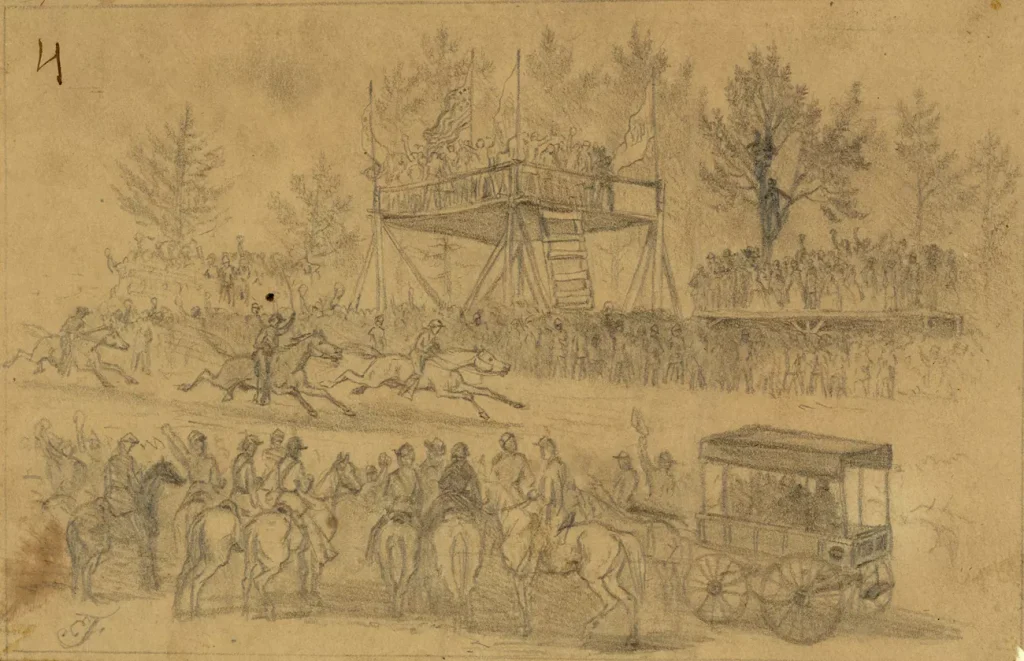
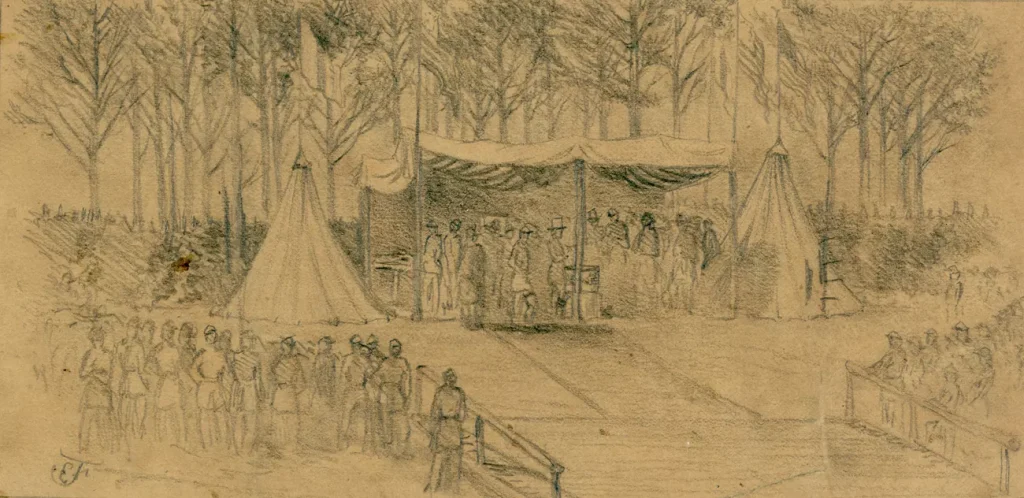
Brigade Chaplain Father Corby of the 88th NY was so struck by the day’s festivities, that he dedicated an entire chapter to this event in his memoirs. He celebrated a Catholic Mass to start the festivities, in a “…rustic church” specially made for the occasion by the men of the Brigade, made ofm15-foot pine logs place upright in the ground TW-feet apart, with accompanying rafters, all interwoven with pine branches. Seating was constructed with logs and camp chairs were made available for the luminaries that attended. Per Father Corby, here included AoP Commander Maj Gen Hookwr and many, if not most, of the army’s Generals.
The day’s festivities concluded with the men back in the camps. At General Meagher’s Headquarters a large platform had been erected and jig dancing and drinks marked the party. Ryan reports that “…the side of an ox, thirty-five hams, two pigs stuffed with boiled chickens and any amount of chickens, ducks, and game” comprised the victuals. Drins were likewise abundant – “…eight baskets of champagne, eight gallons of rum, and twenty-five quarts of whiskey.” Each man in the Brigade received “two gills of whiskey.”
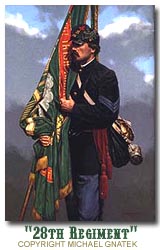
Towards the end of the day, an alert to march was given, in response to some skirmishing then going on near Kelly’s Ford between approximately 2100 US Calvarymen and some 800 Confederates. The Irish Brigade was not in fact ordered out, but the alert had an effect on Peter Welsh. As the regiment fell in, the Regiment’s Color Bearer did not report with the Regiment’s Green Tiffany Flag, and could not tell where it was (Note – perhaps the 2 gills of whiskey had an effect?). in any case, as Welsh reported to his wife in a letter on March 19th, he was sent to collect it from the Colonel’s tent, and was made Sergeant and Regimwntal Color Bearer on the spot. Proud to be selected to carry the Color as he was, the new Sergeant Welsh was doubly glad to be given the honor on Saint Patrick’s Day.
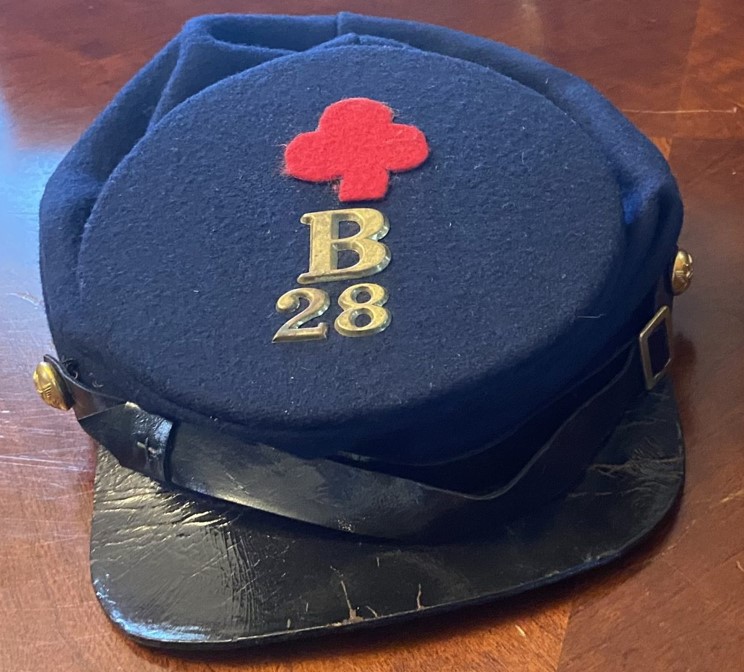
Saturday, 21 March 1863. On this date, Army of the Potomac Commander Major General Joe Hooker issued a circular directing the Chief Quartermaster to furnish Corps and Divisional badges to the Army for “The purpose of ready recognition of corps and divisions in the army, and to prevent injustice by reports of straggling and misconduct through mistakes as to its organization.” The circular went on to say that the badges were to be “…securely fastened upon the center of the top of the cap” and that Inspecting officers would check to make sure that badges were worn as designated.
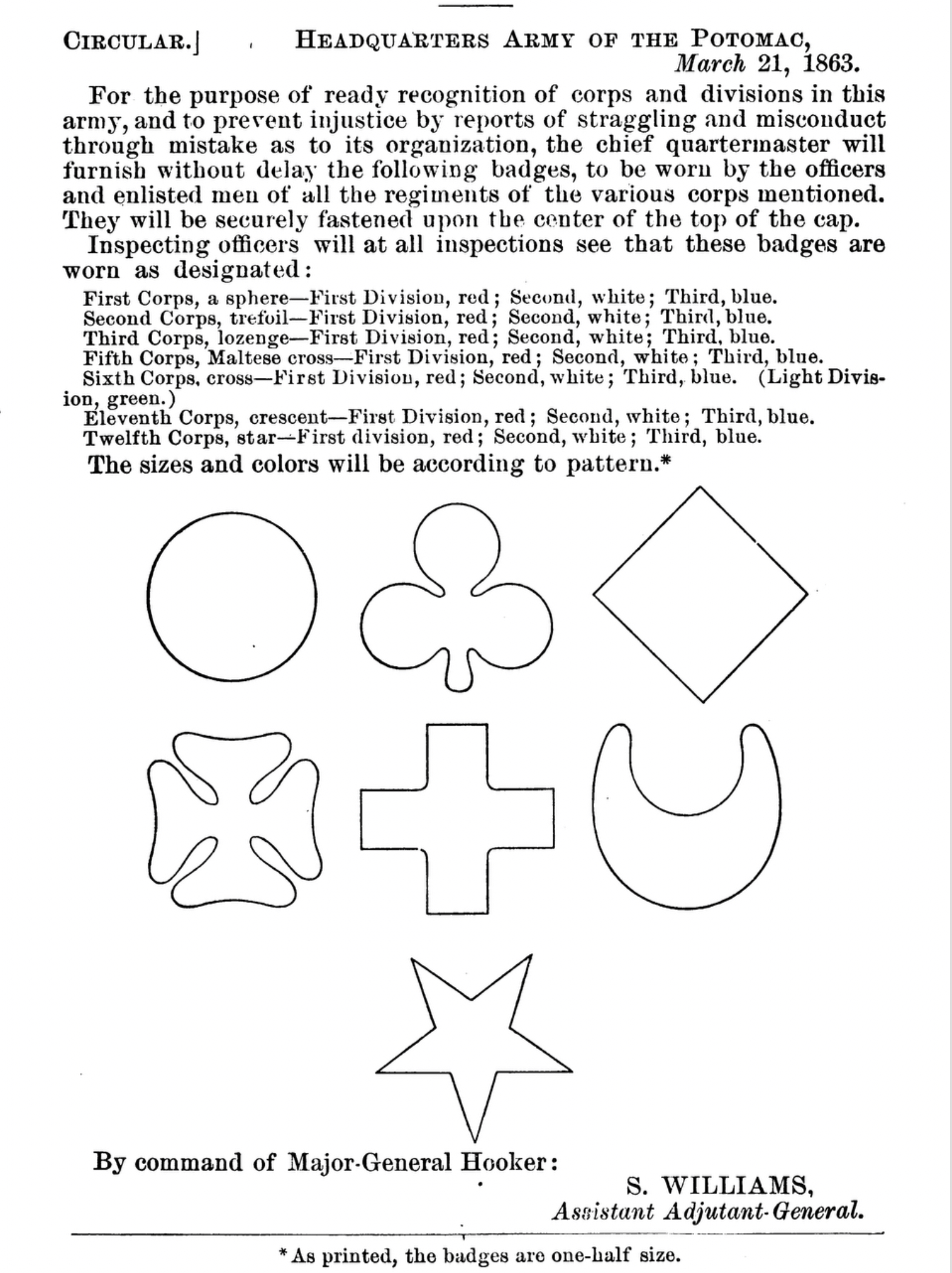

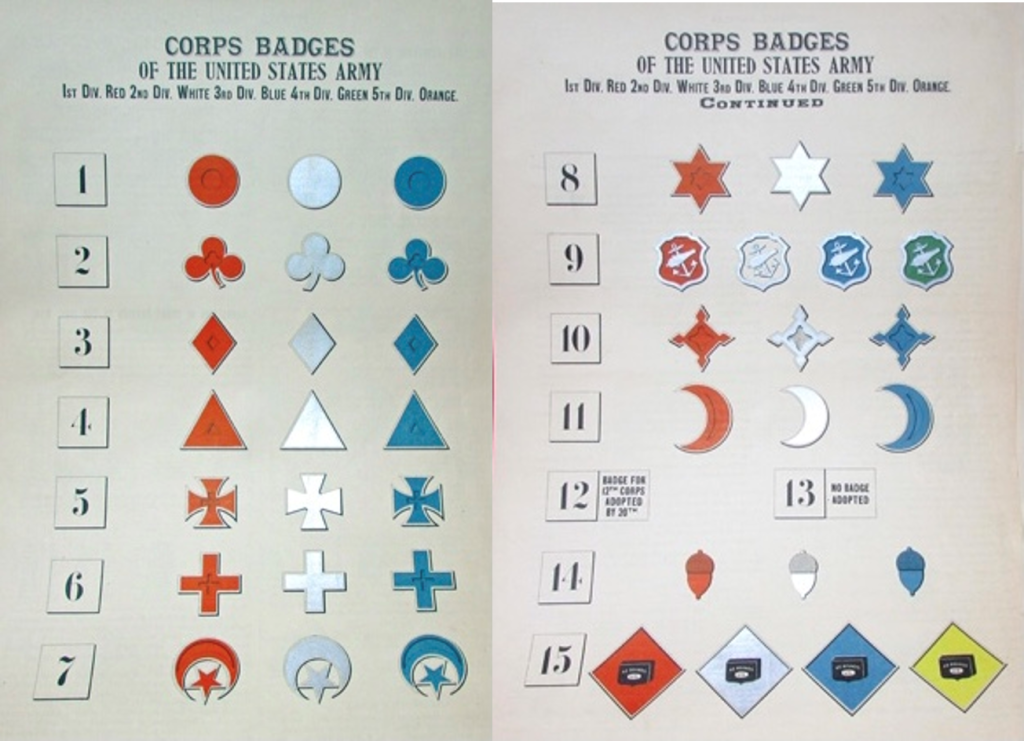
Each Corps received a distinctive badge, with the colors of the badge changing by division – Red (1st), White (2nd), and Blue (3rd) being the natural choice of colors. AoP Chief of Staff Maj Gen Dan Butterfield designed the badges, and initially soldiers in the First, Second, Third, Fifth, Sixth, Eleventh and Twelfth Army Corps, as well as the AoP’s Calvary were the first to receive Corps badges – 122, 578 in total.
Corps badges were initially envisioned as way to facilitate organization and order, but they soon proved a source of unit pride and esprit, with a positive effect on morale. The new symbols soon adorned every soldier and wagon. Sutlers began to sell fancy versions as the idea caught fire. Jeweled versions of high quality were eventually offered in New York and Philadelphia, so popular was the idea.
Sources: O.R., Volume 25, Chapter 37, Part II, pg 152; Conner/Mackowski “Seizing Destiny”pgs 186-187.
Monday, 27 April 1863.
Monday, 27 April 1863.
The Chancellorsville Campaign
Thursday, 30 April 1863.