
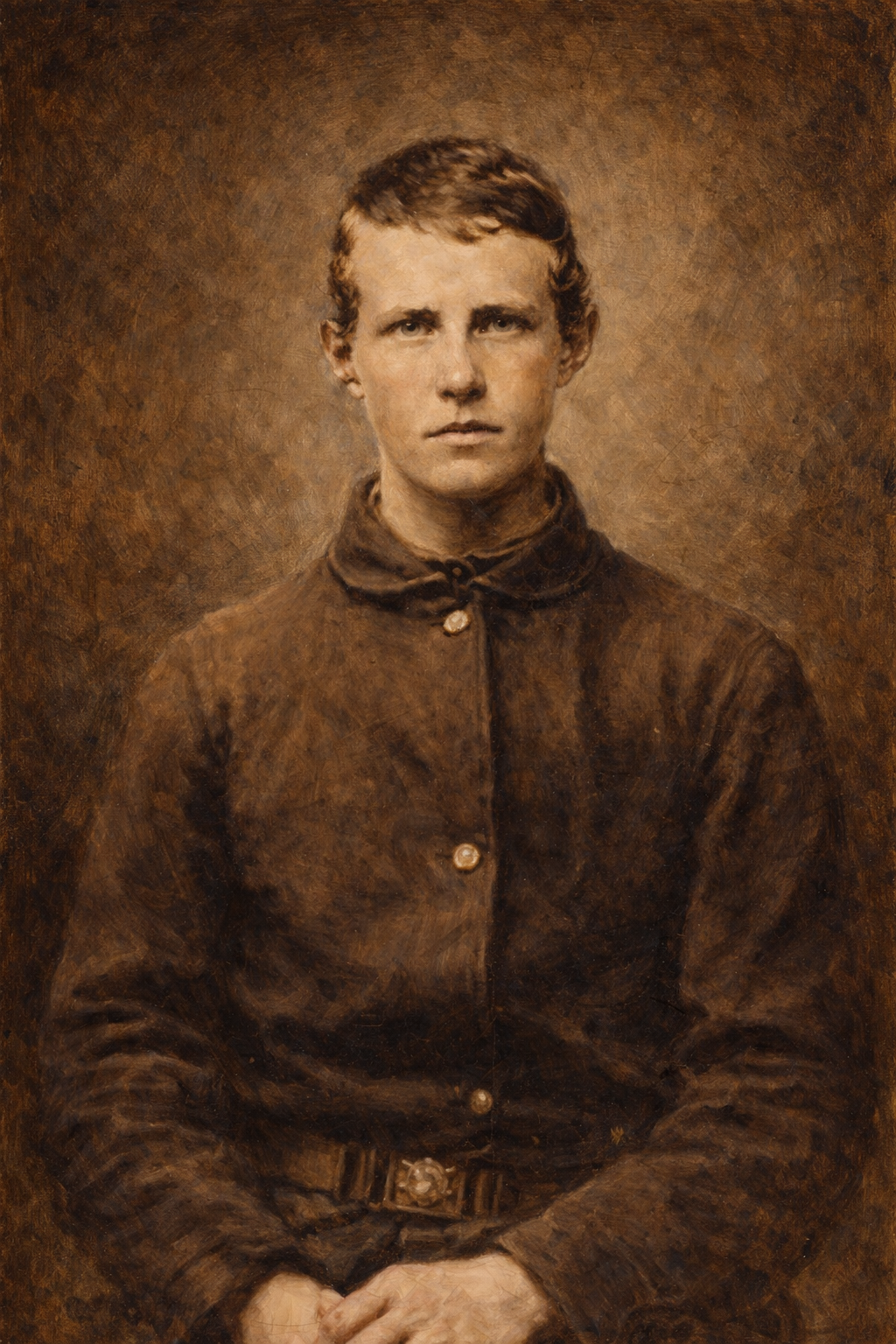
Private John Ryan, an original member of the 28th Massachusetts dedicated several pages in his memoir to cooking in camp and on campaign. His observations are detailed below; they offer insight into the actual practice of the “original cast.”
Source: “Campaigning with the Irish Brigade – Pvt John Ryan, 28th Massachusetts” edited by Sandy Barnard, AST Press, Terre Haute, IN, 2001. Pgs 74-76). Amazon.com Link

Mode of Cooking in Camp
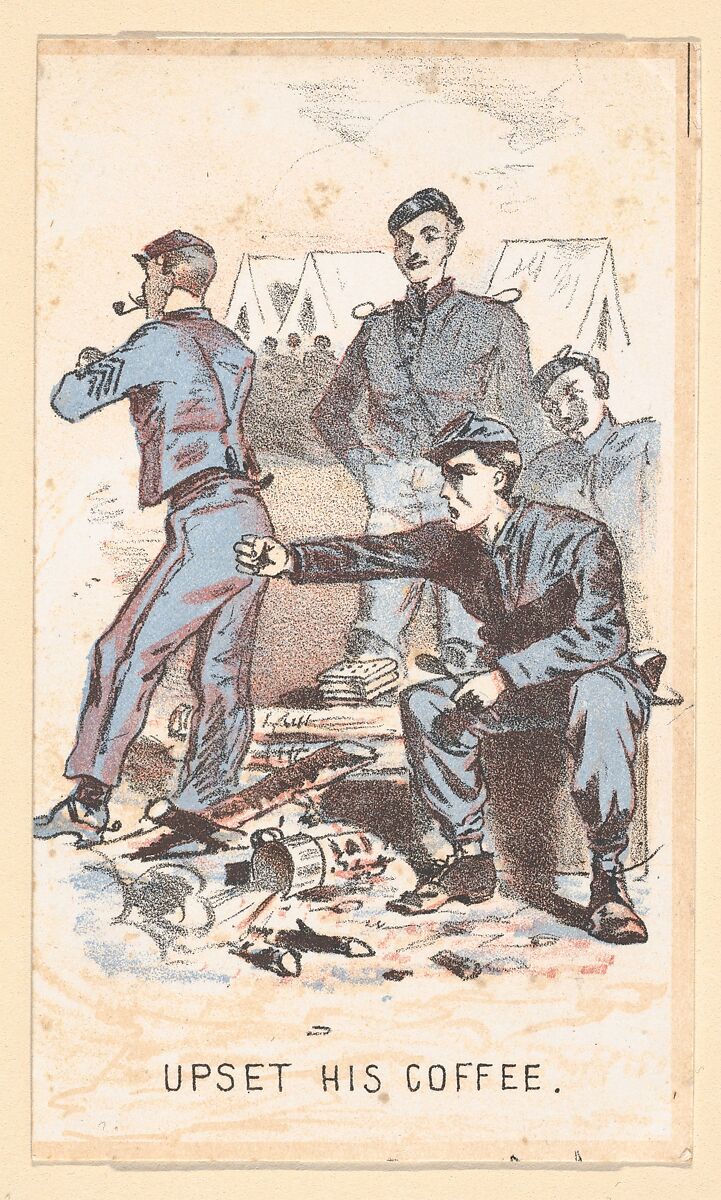
When the companies were in a permanent camp where they were liable to remain for a few days, they generally had two cooks. the cooking was done by driving two forked sticks into the ground, putting a long pole across them, and we had iron hooks which hung from the poles and then attached the camp kettles to these. The same kettles were used for cooking bean soup or pork or beef that were used to boil the coffee in. The coffee was sometimes issued to the companies from the Commissary Dept., green and unground and then ground up in coffee mills by the cooks, but as a general thing, it was issued ground as we received it from our stores at the present time. At breakfast call in the morning, the companies fell in line and proceeded to the cookhouse, where each man got his cup of coffee and a piece of fat pork or salt horse, whichever it may have been, and then proceeded back to the quarters or tents, where we disposed of it to our own liking. At dinner call, we generally got bean soup or rice soup with a piece of meat. Supper consisted of coffee. The rations consisted of about nine or ten hardtack for one day’s ration for one man.
Mode of Cooking on a Campaign
The 1st sergeant of each company would draw a ration a day for each man in his company. If we took five day’s rations with us, the 1st sergeant would take a rubber blanket and spread it down on the ground and pour in the five day’s rations of coffee and sugar together in one pile and then mix it up. If there were thirty men in the company, he would make thirty different piles. Each man would make for his own use a little rubber bag made from a piece of the rubber blanket, the rubber on the outside with a string around it. Each man would take one pile of this coffee and sugar and put it in his bag, and that would have to last for five days. That allowing two table spoons of coffee and sugar mixed for a cup of coffee. Of course, milk was out of the question. The meat was divided in the same manner. If it was pork, bacon, or raw beef, it would be divided equally.
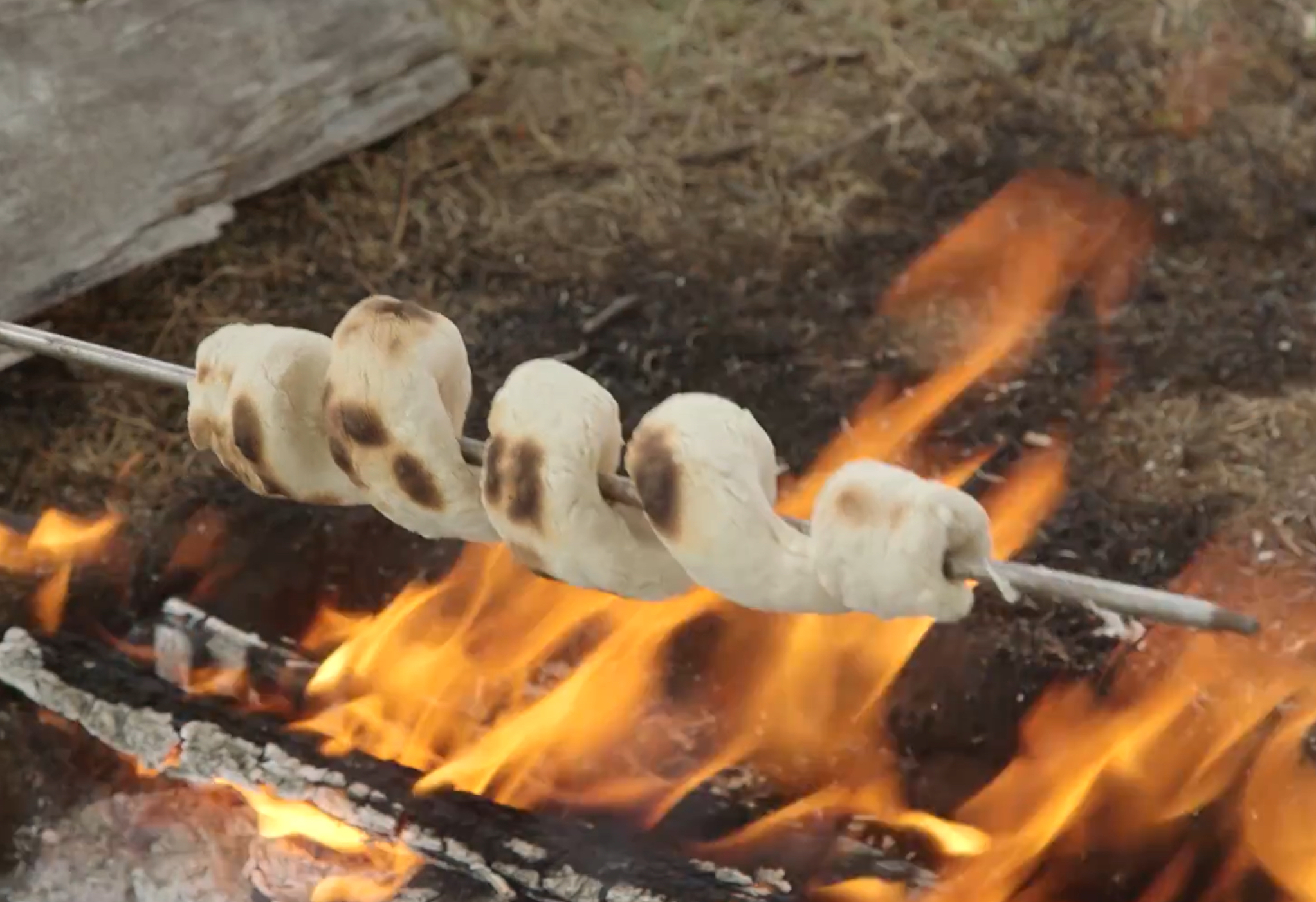
Each man would manage coming into camp at night to have a canteen full of water, which he would pour into his tin cup. Our tin cups consisted of a tomato or oyster can with a piece of wire for a bail over the top of it, which, in marching, we would either hang on the strap or inside our haversacks. To boil the coffee we would make a fire out of brush or anything g we got hold of. We would fill a tin cup from our canteens and hold it on the end of our ramrods, which we took from our guns, over the fire, and it would very soon boil. Sometimes we would set it aside the fire, and if it undertook to boil over, we would lie a piece of a stick over the top of the tin cup, which very soon stopped it from boiling over. The fresh meat or pork we would cut into slices, and either hold it on the end of the ramrod over the the fire or sharpen a long pointed stick and use that.
Another favorite dish that we had was called “scouse.” (Note: Almost certainly a shortened form of “lobscouse”- a simple shipboard stew consumed by 19th century seafarers.) That was made by taking and breaking some hardtack into our tin cups, cutting up a little pork or beef, whatever we happened to have , or sometimes both, and putting in a little pepper or salt. Sometimes we would find wild onions, known as garlic, and those were often cut up and put in. If we chanced to run across a potato patch, that would answer the purpose very well. We then poured in a little water and set it to boil. We carried mixed salt and pepper in a little tin box. The idea of carrying coffee and sugar in a rubber bag was to protect it from rain. If we used a cloth bag, the water would soak through our haversacks and through the cloth, whereas in the rubber bag, it was kept perfect.
Sometimes during our marches, we would halt in the middle of the day for a short rest. A fire would be started and the men would go to boiling a cup of coffee and many times before the coffee was done, the “forward” would be sounded and then would be sounded some words not in Webster’s dictionary. Some of the men would try to pour the coffee into their canteens, others would try to drink it as they marched along, and some would get mad, give it a kick, and let it go.
Return to the Period Rations and Recipes page.