
Brigadier General Meagher’s Official Report on the Battle of Fredericksburg was published in the Boston Pilot Newspaper on 10 January 1863. (Volume 26, No. 2). Meagher’s report is also found in the “Official Records” (O.R.) in vol XXI, pp 240-246. The transcript is below.
Official Report of Brig. General Thomas Francis Meagher.
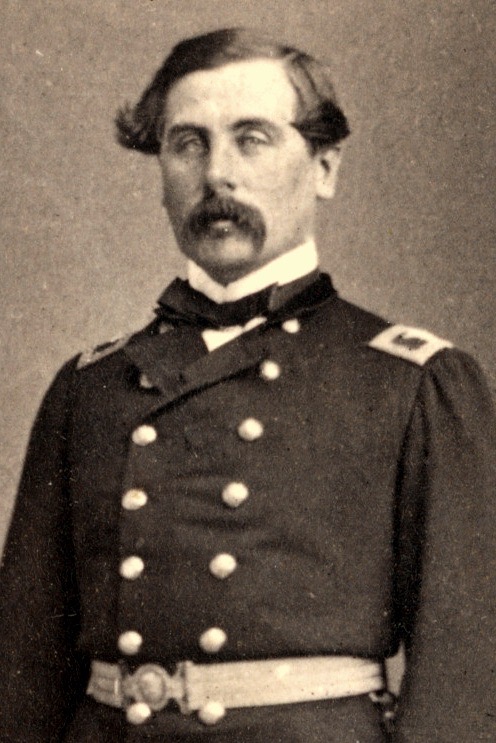
HEADQUARTERS, IRISH BRIGADE, Hancock’s Division, Couch’s Corps, Army of the Potomac, In Camp before Fredericksburg, Va. Wednesday, Dec. 17, 1862,
TO THE ADJUTANT GENERAL OF THE DIVISION :
I have the honor to report, through you, to the Brigadier General commanding the division, the part taken by my brigade in the action of Saturday, the 13th inst.
On the Thursday morning previous, December 11, at seven o’clock precisely, the brigade left the camp from which this report is dated, and proceeded in the direction of the pontoon bridge, over the Rappahannock, which it was arranged the division had to cross.
The brigade never was in finer spirits and condition. The arms and accoutrements were in perfect order. The required amount of ammunition was on hand., Both officers and men were comfortably clad, and it would be difficult to say whether those who were to lead and those who were to follow were the better prepared, or the more eager to discharge their duty.
Arriving within a few hundred paces of the headquarters of Major General Sumner, commanding the right grand division of the army, we were halted by Brigadier General Hanceck in a well sheltered valley, where we stacked armg and bivouacked until halfpast four P. M. The whole day the fire of our batteries and those of the enemy, incessant as it was, taught every man to prepare himself equably and sternly for the desperate conflict that was close at hand.
A few minutes after four o’clock P. M., word was conveyed to me that a gallant body of volunteers had crossed the river in boats and taken possession of the city of Fredericksburg. The State of Michigan fairly reserves to herself the largest measure of pride justified by this achievement.
Immediately on the receipt of this news, an order reached me from Brigadier General Hancock to move forward the brigade and take up a ‘position closer to the river. In this new position we remained all night.
At seven o’clock the following morning we were under arms, and in less than two hours the head of the brigade presented itself on the opposite bank of the river. The order of the march observed by the division in crossing was as follows :—Colonel Zooks, commanding French’s old brigade, led the way. The Irish Briiade came next. Brig. Gen. Caldwell brought up the rear.
Passing along the edge of the river to the lower bridge, the brigade halted, countermarched, stacked arms, and in this position ‘ankle deep in mud, and with little or nothing to contribute to their comfort, in complete subordination and good heart, awaited further orders. An order promulgated by Major General Couch, commanaing the corps, prohibited fires after nightfall. This order was uncomplainingly and manfully obeyed, by the brigade. Officers and men laid down and slept that night in the mud and frost, and, without a murmur, with heroic hearts, composed themselves as best ’they could for the eventualities of the coming day.
It is with hesitation I introduce into an official paper, where facts alone “should be set forth,’ any expression of personal feeling; but I should be doing an injustice to the brigade, if, in furnishing this report, I do not confess that the fortitude and noble equanimity with which the hardships of the night were borne were such as to affect me deeply.
I shall also digress from the strict line of an official statement to affirm, as I am truly proud to do, that during the occupation of Fredericksburg, previous to as well as after the advance of our forces on the enemy’s works, the Xrish Brigade scrupulously abstained from every act of depredation.
A little before eight o’clock A. M., Saturday, the 13th inst,, we received orders to fall in and prepare instantly to take the field., The brigade being in line, I addressed, separately, to each regiment a few words, reminding it of its duty and exhorting it to acquit itself of that duty brayely and nobly to the last. Immediately after the column swept up the street towards the scene of action, headed by Col. Robert Nugent, of the Sixty-ninth, and his veteran regiment, every officer and man of the brigade wearing a spriig of evergreen in his hat, in memory of the land of his birth.
This advance was firmly and brilliantly made through this street under a continuous discharge of shot and shell, several men falling from the effects of both., Even whilst I was addressing the Sixtg—ninth, which was on the right of the brigade, three men of the Sixty-third were knocked over, and before I had spoken my last words of encouratgement the mangled remains of the poor fellows—mere masses of flesh and rags—were borne along the line to the hospital of French’s division.
Emerging from the street—having nothing whatever to protect it—the brigade encountered the full force and fury of the enemy’s fire, and, unable to resist or reply to it, had to push on the mill race, which may be described as the first of the hostile defences.— Crossing the mill race by means of a single bridge, the brigade, diverging to the right, had to deploy into line of battle. This move- ‘ ment necessarily took some time to execute. The Sixty-ninth, under Colonel Nugent, being on the right, had to stand its ground until the rest of the brigade came up and formed. I myself, accompanied by Lieut. Emmet, of my staff, crossed the mill race on foot from the head of the street through which the column had debouched. Trudging up the ploughed fields as well as my lameness would permit me, to the muddy crest along which the brigade was to form inline of battle, I reached the fence on which the right of the Sixty-ninth rested.
Here I remained in conversation for a few minutes with Col. Nugent; Lieut. Miller, of Brigadier General Hancock’s staff, dashing up on horseback during the conversation, and furnishing me with additional instructions, in obedience to which I directed Col. Nugent to throw out two companies of his regiment as skirmishers on the right flank. This order was being carried out, when the other regiments of the brigade coming up with a brisk step, and deploying in line of battle, drew down upon themselves a terrific fire. Nevertheless the line was beautifully and rapidly formed, and boldlg advanced, Col. Nugent leading on the right, Col. Patrick Kelly, commanding the 88th, being next in line, both displaying a courageous soldiership which I have no words, even with all my partiality for them, adequately to describe.
Major Joseph O’Neil, commanding the Sixty-third, was as true that day as he has ever been. His command took position on the left of the centre of the line. The centre was assigned to the Twenty-eighth Magsachusetts Volunteers, commanded by Col. Byrne, this regiment having in its possession the only green flag under which the Irish Brigade had the privilege that day to advance against the enemy.
On the left appeared the One Hundred and Sixteenth Pennsylvania Volunteers. A new regiment, it had but very recently joined the brigade; but in its conduct, from Bolivar Heights, where it was first associated with the brigade, to the gresent moment, when its gallantry is placed on record,ithas proved itself worthy of the cause into which it ‘threw itself with so much enthusiasm.
Thus formed under the unabating tempest and deluge of shot and shell, the Irish Brigade advanced against the rifle pits, the breastworks and batteries of the enemy. I myself ordered the advance, encouraged the line and urged it on. Owing, however, to an ulcer in the knee joint, which I had concealed and borne up against for days, I was compelled with a view of being of any further service to the brigade that day, to return over the muddy slope and ploughed field, to get to my horse, which had been left in charge of an orderly along with the other horses of the brigade, Brig. General Hancock having advised us all to dismount and act on foot during the assault.
On my way to where my horse was standing, I met Captain Hart, of the Rightyelgfith, the Acting Assistant General of the brigade, moving up from the left to the right of the line, with a bright calmmness and an intelligent courage steadying the men for the attack.
Passing then throufih crowds of slain and wounded, all befouled with blood and the mud in which they had been struck down, and recrossing the mill race, which I did with the assistance of two wounded soidiers, I reached the head of the street, from which, as I have already stated, the brigade debouched, and there took my horse. Having mounted, I started with my orderly to rejoin the brigade on the right, and with that purpose took the street over and beyond which the two companies of the Sixty-ninth, under Capt. James Saunders, one of the sturdiest and bravest of our officers, had been thrown out as skirmishers.
I had not proceeded many paces up this street before I met the remnant of the Sixty-third, carrying the regimental color, coming towards me, headed by Capt. Gleason, than whom the brigade cannot boast of a more resolute and stalworth soldier. With these few survivors of the Sixty-third were some of the Sixty-ninth.
Fearing that the enemy might assume the offensive and break through our lines along the upper part of the cify, I halted this handful of the brigade on the second street parallel to the mill race. Here I remained, under the personal orders of Brigadier General Hancock, who happened to ride up and communicate with me at the moment, gathering in the fragments of the brigade, until, finally, I was ordered by him to fall back and concentrate on the street from which we had-taken up our march for the battle field.
In this street the hospitals of the brigade ‘had been established, and to it, consequently, all the officers and men of the brigade who were enabled to do so instinctively returned. But while the fragments of the brigade were here and thus concentrating, I had every reason to become convinced that the hospitals were dangerously,if not fatally exposed. I therefore sent two of my aides—Capt. Hart and Lieut. Blake—~to Brigadier General Hancock, to request of him that he would be so good as to authorize me to take all that was left of my command across the river, the request for such authorization being based on the fact that, while there were not over three hundred of the brigade, either maimed or serviceable, who had reported themselves up to that time, the badly disabled were so numerous as to require the assistance of all those who were unhurt. Even while I was waiting for Capt. Hart and Lieut. Blake to return, several discharges of shell and Minie balls broke over and through the hospitals of the Sixty-ninth, the Sixty-third, the Eighty-eighth, and the buildings and fences which immediately adjoined them.
Capt. Hart and Lieut. Blake, on their return, having given me to understand that I had a conditional authorization from Brigadier-General Hancock to transfer the brigade to the north bank of the Rappahannock, under the circumstances just mentioned, I assumed the responsibiiity of doing so. I did so under the impression of my being partially or conditionally authorized to do sc. But this impression,a few hours later, I discovered to be erroneous. I should not, however, have brought over my command from Fredericksburg, nor so much as have asked permission to that effect, but for the terrible accidents to which the wounded of my brigade, lying bleeding and helpless ther% in those menaced hospitals, were exposed.
That I myself did not desire to retire beyond the range of the rifle pits and batteries of the enemy ; that I was solely actuated at the time in doing what I did by an affectionate and intense concern for my wounded officers and men—it will suffice for me to refer to Brigadier General Butterfield, who onquestioning me regarding the brigade, the afternoon of the assault, at the headquarters of Gen. Wilcox, and in presence of several officers, was told by me that I feared the Irish Brigade was no more ; that out of one thousand two hundred men I had led to the field that morning, little more than two hundred and fifty had, up to that time, reported to me under arms, but, that, for my own part, I should stay on the ground, and, were it my fate to have no comamand, would be happy to act as his aide, or on the staff of any general to whom my services might in the slightest way be likely to prove useful.
Having placed our wounded in the camp we left the night before, I proceeded to Gen, Sumner’s quarters to report my action to him, He was not there, None of his staff were there. But Gen. Burnside coming in half an hour or so after I had arrived, I communicated to him what I have here stated. He appeared not the least dissatisfied, and cordially inquired about the brigade. Shortly after, Gen. Sumner entering with his staff, I repeated to him all I had said to General i Burnside,.adding, however, that my principal object, having reported to him and explained the reasons of my crossing the river, was to procure rations and ammunition for my men. The rations had been flung away with the haversacks and blankets, as the brigade advanced to the assault. The ammunifion had been exhausted on the field. Having procured a sufficient quantity of both,and seen my wounded and disabled men as comfortably encamped as gossible, I recrossed the Rappahannock, and between 11 and 12 o’clock that night, reported myself to the Brigadier General commanding the division.
On the way, however, having crossed the upper pontoon bridge,l had to pass the houses that had been taken for hospitals for our brigade that morning, and in them found several .officers and men who had been brought in from the field during the short time I was on the other side of the river,~~ Most of them were in great pain ; two or three of them, the brave Lieut. Callaghan, of the 69th, was one of them, were in great agony, not having had anything to sustain or soothe them since they received their wounds. Lt. Emmet, who accompanied me, instantly returned to the camp where I had left the wounded, to bring over surgical and medical agsistance to the sufferers. Dr. Powell,of the 88th, promptly obeyed the order conveyed by the gallant young lieutenant, and by his skill and devotion brought comparative ease and happiness to many a sufferer in those sad hospitals that night.
The next day, a little after sunrise, every officer and man of the brigade able again to take the field, by order of Brigadier General Hancock, recrossed to Fredericksburg, and took up the same position on the street nearest the river which we had occupied previous to the advance, prepared and eager, notwithstanding their exhausted numbers and condition, to support the Ninth corps in the renewal of the assault of the previous day, that renewal having been determined on by the General-in-Chief. Of the twelve hundred I had led into action the day before, 280 only appeared on the ground that morning. This remnant of the Irish Brigade , unnerved and undeterred, still full of heart, still wearing the evergreen, inspired by aglowing sense of duty, sorrowful for their comrades, but emboldened and elated by the thought that they had fallen with the proud bravery they did, this noble little remnant awaited the order that was once more to precipitate them against the batteries of the enemy.
I close this report by acknowledging the gallantry, the ability, the steadiness and devotion of the officers of the several regiments constituting the brigade, and, in making this | acknowledgment, have sincerely to deplore the loss, in the first place, of Major William Horgan, of the Eighty-eighth New York Volunteers, than whom a truer man or better and braver soldier I have never known.
Colonel Rohert Nugent, commanding the Sixty-ninth New York Volunteers, acted with signal bravery, leading as he did, the column into the field with a brilliancy of bearing worthy of the historic reputation attached in Europe to the name he bears. His demeanor and the high spirit he displayed, his words and looks, all were such as could not fail to encourage and incite his men on that day.
Major James Cavanagh, also of the 69th most ably and daringly supporting his Colonel, fell severely wounded; but I trust and pray not fatally; for never was there a truer heart, never was there a bolder arm, never was there a brighter or sounder brain. It is impossible, however, for nie to enumerate, in the terms of affectionate appreciation which I desire, and which they deserve, the losses which the brigade has incurred. Hereafter, should an opportunity be afforded me, I shall write and speak of such men as Licutenants Buckley and Bermingham—men who on that day, at Fredericksburg, most worthily supplied the place of the officers who fell on the battle-fields before Richmond and in the great repulse of the rebels at Antietam.
Looking along the ranks of the 88th New York Volunteers, as I did with a mournful pride the day after the assault, I missed, besides Major William Horgan, Lieut. Thomas Murphy, Adjutant John R. Young, and Lieut. McCarthy; and the only consolation to me in the contemplation of these losses arises from the fact that such men as Col. Patrick Kelly, Lieut. Col. Quinlan, Captain Patrick K. Horgan, Captain John Smith, Captain Burke, Captain Nagle, and other intelligent and brave officers like them are still to the good work.
In the 63d New York Volunteers I have lost, for some time at all events the efficient services of Major Joseph O’Neil—services that were ever most promptly and heartily rendered wherever and wll)lenever his military obligations or patriotism required them, Had I time it would be, indeed, a pleasing duty for me to speak, in connection with the 63d, of such officers as Captains Gleason, Condon, Moore, and-Licut. James R. Brady and others, whom it would be difficult for me now to mention without having the leisure to speak of them with adequate commendation.
Within the last three months two regiments were incorporated in the brigade. Pennsylvania contributed the 116th; Massachusetts contributed the 28th. The fact that Col. Heenan, Lieut. Col. Mulholland and Major Bardwell,of the first-named regiment, were badly wounded, speaks fully for the intrepidity and mettle of the men of which it is composed. Where there are such officers there must be staunch men.
The 28th Massachusetts Volunteers was raised for the Irish Brigade; but, owing to some mistake, was kept aloof from it until, by a most fortunate vicissitude of the war, it was restored to us three or four weeks ago. It is a substantial and splendid accession to the brigade. It has sinew, heart and soul. It is commanded by an officer (Col. R. Byrne) than whom it would be difficult to find one of superior aptitude for such a command, combining as he does, the practical experience and matured capacity of a soldier of some years standing with the natural qualities which enable one to figure prominently and successfully in military life. I have not a word but one of unqualified commendation to bestow on this well-regulated and admirably disciplined regiment. Major Carraher, one of the best of its excellent officers, was wounded in the head.
The chaplains and surgeons of the brigade could not be excelled in their devotion to the wounded. Their services were unremittingly and most zealously rendered. Dr. Francis Reynolds, Dr. Pascal Smiith, Dr. Lawrence Reynolds, with their assistant surgeouns, behaved nobly.
The first-named officer again vindicated the brilliant reputation he brought with him from the Crimea; and his conduet is all the more deserving of eulogy and gratitude that a day or two before the battle he had obtained leave of absence for a fortnight, but much to his inconvenience remained with the. brigade rather than be absent from his post at such a time.
A correct return of the killed, wounded and missing of the brigade has been forwarded to the headquarters of the division. For individual instances of courage and dgood conduct on the day in question, and the more minute incidents and details of the assault, so far as the brigade took partin it, I respectfully refer you to the reports of the colonels and other regimental commandants.
I most cordially recommend to the favorable notice of the general commanding the division every member of my staff. Captain Wm. G. Hart, of the 88th, was as brave and active under the heaviest fire as he is faithful, diligent and indefatigable in the discharge of his duties as Acting Assistant Adjutant General of the brigade. Lieut. John Blake, of the same regiment, displayed courage and soldiership of the highest order; but in doing so only continued to display those qualities which have brilliantly characterized his conduct in mine desperate engagements. Lieut. Richard Emmet, who, in the earliest dawn of manhood, hardly yet emerged from boyhood, stood for the first time on the field of battle, astonished all who witnessed his artless bravery—fearlessly and brightly, with sunshine in his heart, and joyousness in his every glance, wearing unconsciously throughout the storm, laurels which many an older brow might well be proud to win. In connection with the staff, I should be doing a serious injustice to an admirable officer were I to omit the name of Captain Malachi Martin, the most able and indefatigable Quartermaster of the brigade, who, on different occasions, accompanied me to the field, and under fire, in the midst of the worse perils of the fight, rendered me essential service in the most generous and gallant style.
I have the honor to be, very truly, your obedient Servant,
THOMAS FRANCIS MEAGHER
Brig. Gen., Commanding the Irish Brigade.
RETURN TO REGIMENTAL HISTORY PAGE